Trimming Rehabilitation Portfolio
This page provides examples of horses that I trim or have rehabilitated. Join me on Facebook to see more photos and articles on horse hoof care.
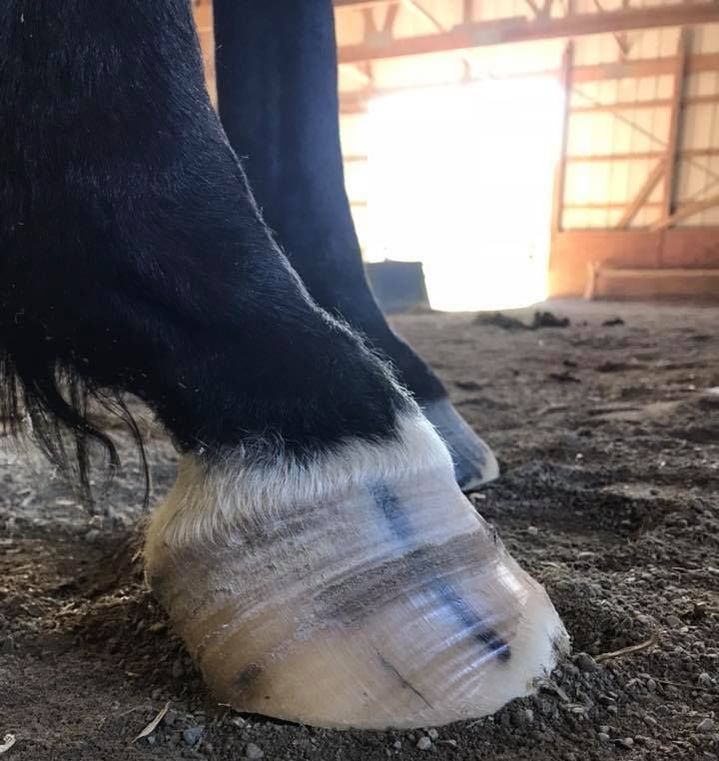
2021 Founder Case Barefoot and Sound
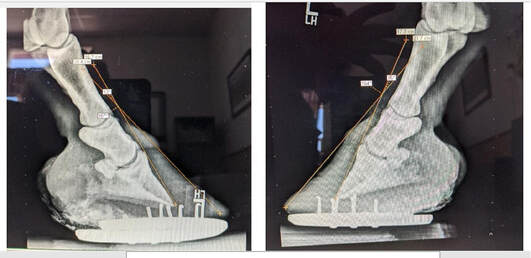
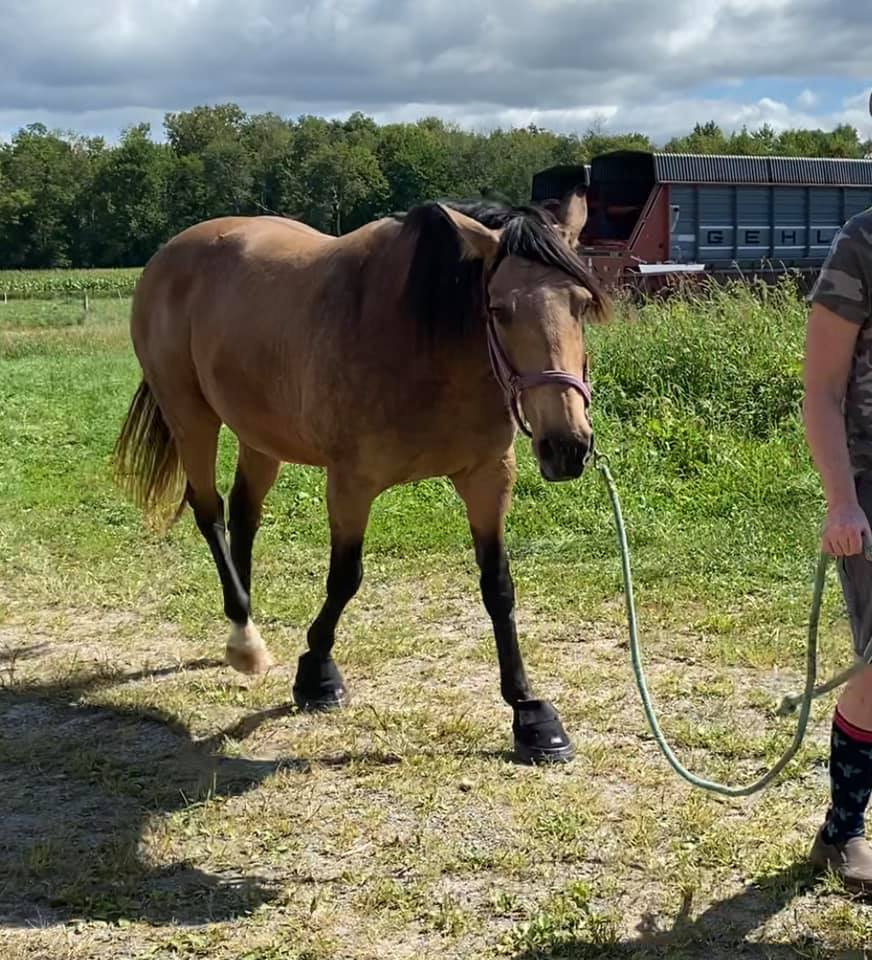
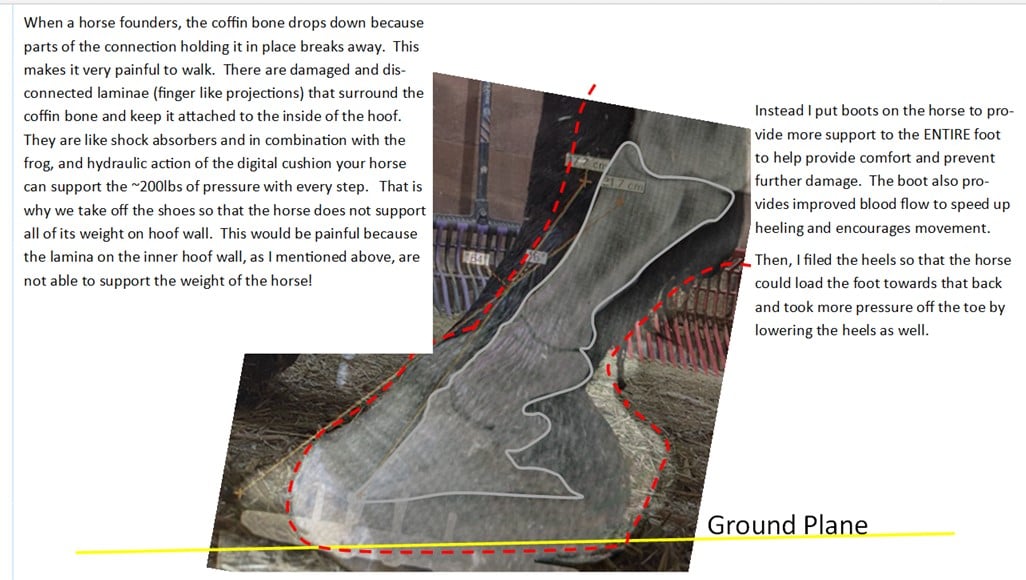
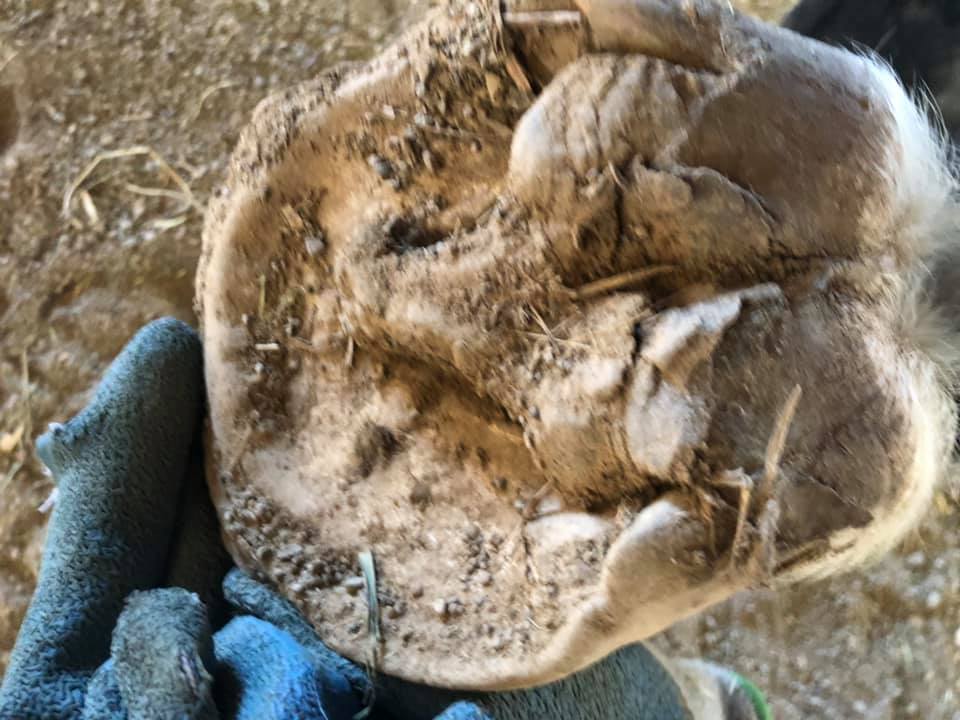
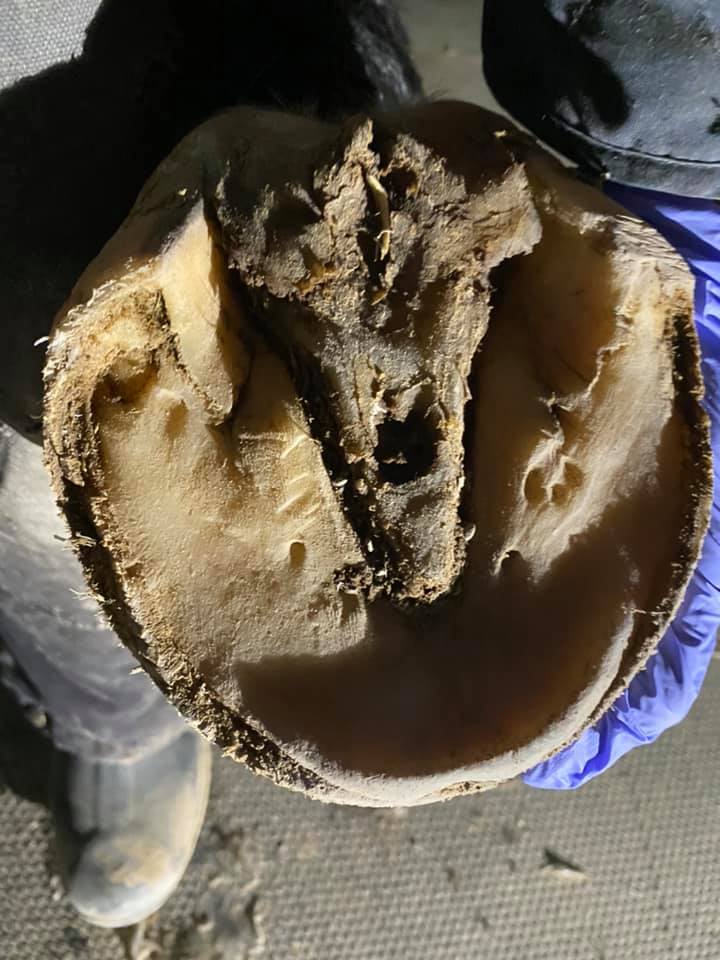
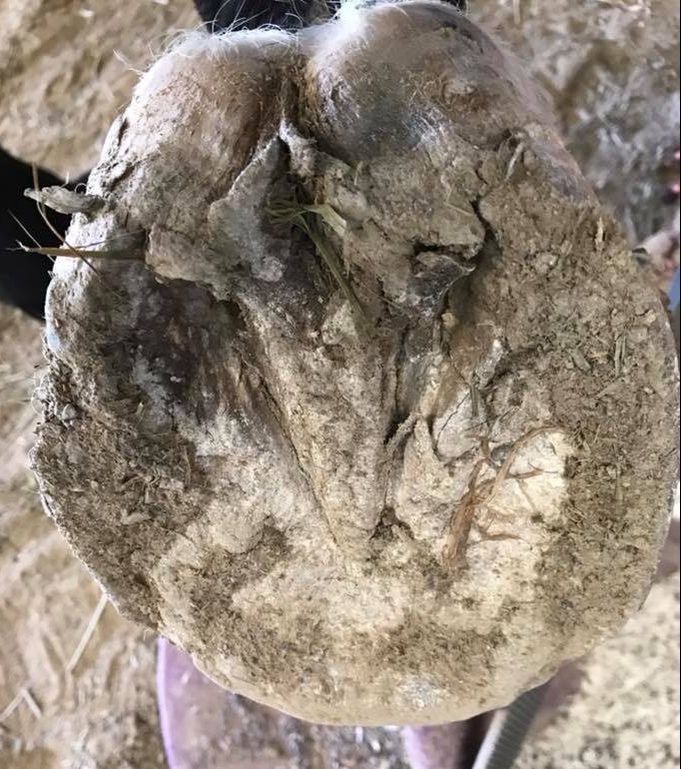
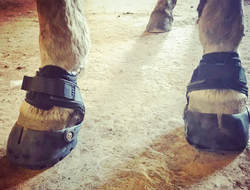
A woman contacted me asking if I could help her mare, Sugar. After looking at the radiographs taken by the vet, it was clear that she foundered. We had a lengthy conversation over the phone, and then we set up an appointment. I started by assessing the whole horse. Then, I reviewed the plan, removed the shoes, trimmed, and fitted the mare with EasyCare boots. Within a week, the owner contacted me and said that Sugar was galloping around and that she busted out of her boots! (...and this is the same horse that foundered?) The owner was able to repair the boots and put them back on. Eventually, after several 5 week trim cycles, Sugar no longer needed boots. I was able to change the functionality of the hoof, through trimming technique, that lead to positive changes in the internal structure and function (over time). In addition, the owner made necessary changes to diet, and the horse is sound. The best part is that THE OWNER IS RIDING HER HORSE again (something she didn't think she would ever be able to do).
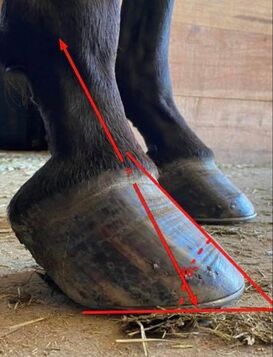
Before I took shoes off.
|
|
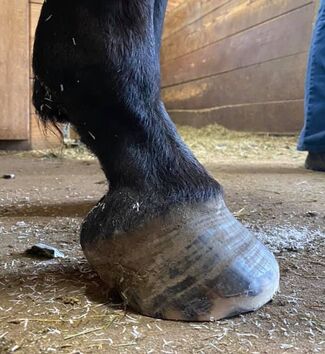
Post trim 10/21. I did continue to trim the foot after taking the picture but never took an another one that day.
|
|
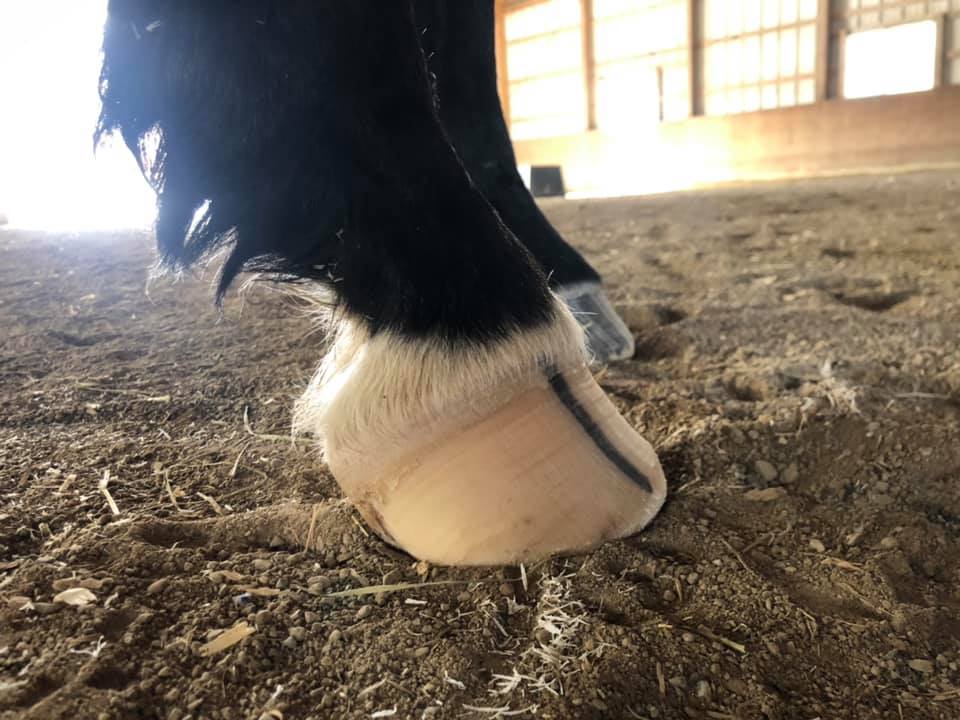
Updated photo collage of this horse. She is very sound! This horse should really have a 4 week trim cycle instead of five. I have to think carefully about how much to take off and it depends on the frog, the sole, the environment, etc., In this series of photos I left the heels a little high to protect the frog because the ground is so hard and rocky in the pasture. I included a side by side before and after and the solar view of the trim. She looks broken back but it is the angle I captured!
|
|


2021 Rehabilitation Barefoot Hero
Meet Dell, a shy but sweet TB who needed rehab help. When I first met him in August of 2021, Dell's feet were in rough shape, and he was lame. However, this is a story with a happy ending. It has been a whole year and Dell is sound and still barefoot. Check out the photos of Dell and his owner, Taylor, below, going over jumps. What did it take to help Dell become sound? We used boots, short-interval trimming, diet changes, exercises, treating thrush, and time. The owner, barn manager Katie, and I worked very hard, as a team.
After learning more about his situation, I immediately fitted Dell with boots to provide comfort. Then, I worked with his owner and barn manager to develop a plan for Dell. We looked at diet, hoof management, exercise and his turnout/environment. The goal was to improve soundness, hoof morphology (shape-function), and overall posture. Then, I came back a few weeks later. He busted out of the Easyboots because he was running around, clearly he was feeling better. I thoughtfully trimmed his feet, fitted him with Scootboots, took notes, photos and discussed progress with Taylor and Katie. Everyone's efforts paid off and now Dell is barefoot, sound and happily back to work!
After learning more about his situation, I immediately fitted Dell with boots to provide comfort. Then, I worked with his owner and barn manager to develop a plan for Dell. We looked at diet, hoof management, exercise and his turnout/environment. The goal was to improve soundness, hoof morphology (shape-function), and overall posture. Then, I came back a few weeks later. He busted out of the Easyboots because he was running around, clearly he was feeling better. I thoughtfully trimmed his feet, fitted him with Scootboots, took notes, photos and discussed progress with Taylor and Katie. Everyone's efforts paid off and now Dell is barefoot, sound and happily back to work!
|
|
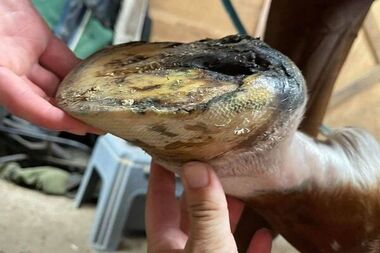
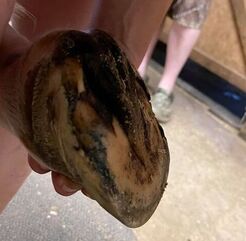
Here are the photos of his feet the first day I arrived at the farm to help Dell. You can see his heels collapsed; he has a thin sole and a weak, damaged frog. My first goal was to help him get comfortable with boots. Then, develop a plan to help improve the structure of Dell's hoof so that it can function in a way that will allow him to achieve soundness.
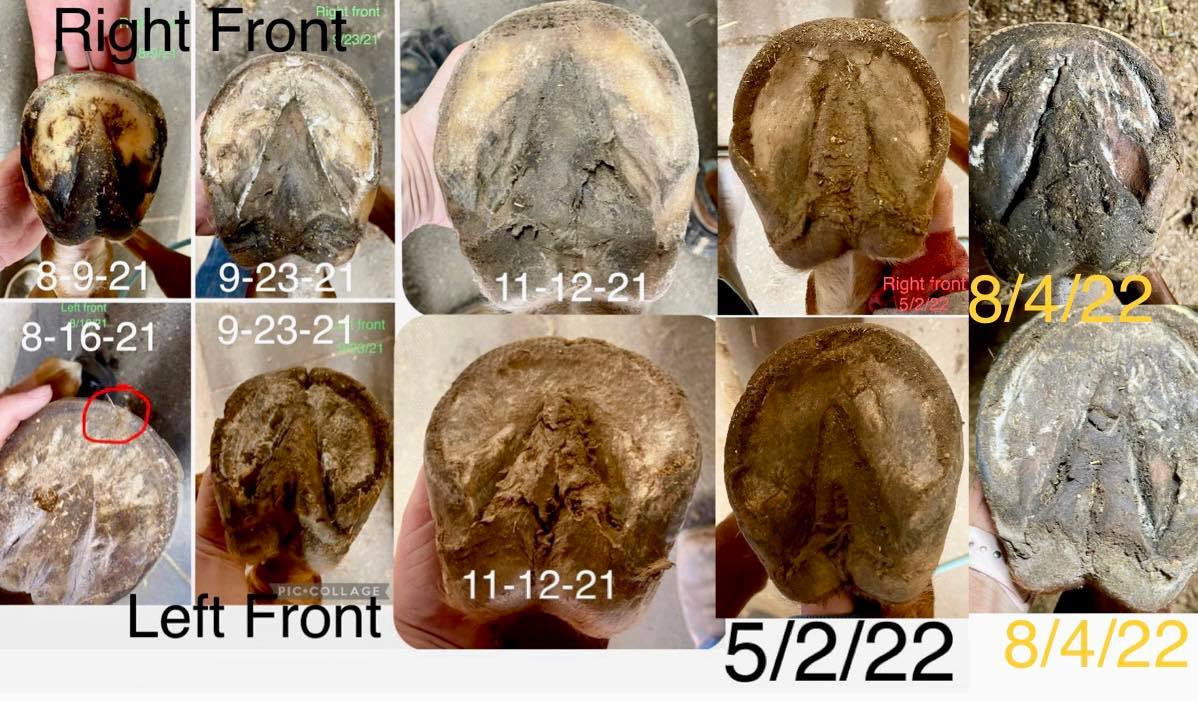
** I trimmed Dell from 8/21 to 3/22. Then, he went back to the barn farrier. I also want to add that it takes time to make changes to a horse's hoof. Sometimes it takes a few weeks; for other horses, it may take years. There is so much that goes into improving the foot. Vets, trimming, diet, movement, exercise, saddle fit, bodyworkers, tackling diseases and disorders, and more! Soundness may be achievable when the right team is in place and the horse gets the consistent care it needs. **There are some cases where horses have issues that are not correctable, and soundness may not happen. This has to be determined by your veterinarian.
Helping a Horse with Huge Hoof Crack
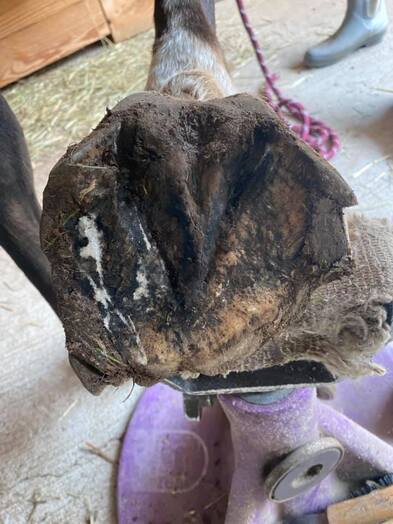
I had an opportunity to help a horse that lost a good chunk of his toe. I think that the wet conditions in NY plus muggy weather caused his hooves to soak up water, become soft and he chunked it off stomping flies or possibly landing on something like a rock in the pasture.
I did a couple of mark ups in the photos below. When a hoof is soft, from wet environments, it may not slough off the way it might in drier footing. So excess growth creates problems. The toe grew long (red dotted line), the heels were dragged forward and became underrun (yellow arrow). The sole and bar were bumpy and over grown. In fact, the bars became long flaps like elephant ears and folded over (potentially becoming painful). The flaring and overgrowth pushed the hairline up (see white dotted line) and you can see the (blue line) lateral cartilages popping up.
The horse was sore. It was challenging to pick up feet to trim all the way around as he needed frequent breaks to rest the injured hoof. So, I worked fast and did what I could for his problem foot while giving the other feet a break by placing them on a pad for comfort.
If you look at the last hoof, I added a solar view of the hoof with markups. It shows center of rotation and approximate location of the coffin bone. The dot that is closest to the toe. He came pretty close to the bone!
I corrected the heels, removed flaring, straightened the bar, cleaned up the hoof wall and created a comforting boot wrap to provide comfort.
I recommended no grass/grain. Movement if comfortable on dirt lot, Supplement such as California Trace or Vermont Blend, Vet/Radiographs, and Blood work for possible Insulin resistance.
My client contacted me a few hours later and said that the boot was helping and that he was feeling better already. I wanted to add an update. This horse Was feeling much better so I was able to go back and finish trimming him. I put a diaper boot on him. He was doing much better and I’m glad we waited a few days.
I did a couple of mark ups in the photos below. When a hoof is soft, from wet environments, it may not slough off the way it might in drier footing. So excess growth creates problems. The toe grew long (red dotted line), the heels were dragged forward and became underrun (yellow arrow). The sole and bar were bumpy and over grown. In fact, the bars became long flaps like elephant ears and folded over (potentially becoming painful). The flaring and overgrowth pushed the hairline up (see white dotted line) and you can see the (blue line) lateral cartilages popping up.
The horse was sore. It was challenging to pick up feet to trim all the way around as he needed frequent breaks to rest the injured hoof. So, I worked fast and did what I could for his problem foot while giving the other feet a break by placing them on a pad for comfort.
If you look at the last hoof, I added a solar view of the hoof with markups. It shows center of rotation and approximate location of the coffin bone. The dot that is closest to the toe. He came pretty close to the bone!
I corrected the heels, removed flaring, straightened the bar, cleaned up the hoof wall and created a comforting boot wrap to provide comfort.
I recommended no grass/grain. Movement if comfortable on dirt lot, Supplement such as California Trace or Vermont Blend, Vet/Radiographs, and Blood work for possible Insulin resistance.
My client contacted me a few hours later and said that the boot was helping and that he was feeling better already. I wanted to add an update. This horse Was feeling much better so I was able to go back and finish trimming him. I put a diaper boot on him. He was doing much better and I’m glad we waited a few days.


|
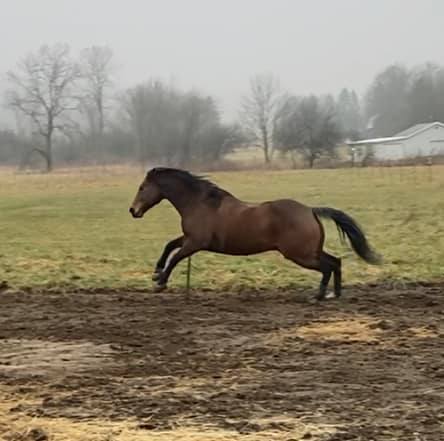
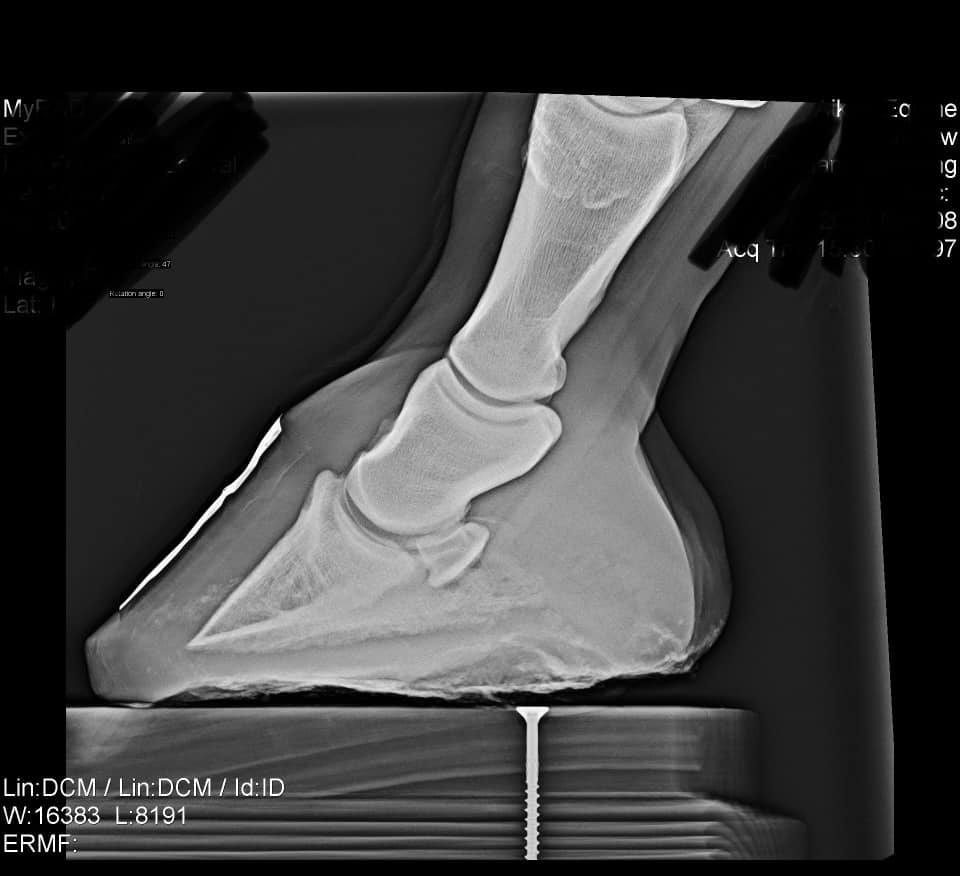
Metabolic Horse RehabThis is a horse that I have been trimming for several years. He has good feet and has been sound. One day the owner told me that her gelding had laminitis. The cause was most likely due to grass consumption. The vet came out and took radiographs. We fitted the horse with boots, tested the hay, and made changes to the diet. The photo I included shows my client's horse running around - feeling better! I included a picture of the radiographs. He was due for a trim but, hence the longer toe, but overall you get an idea of the quality of trim I provide my clients.
|
|
General Photos and Case Studies


|
|
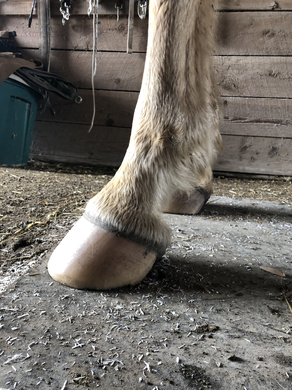
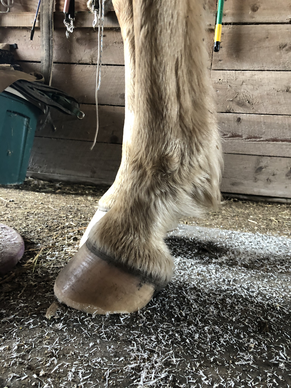
This is a mare I trim regularly. (Upper photo is before trim) A year ago she had very high heels. She is starting to hold the trim. Meaning that she has been moving differently and her feet are looking healthier. (Below is after trim).
|
|
|
|
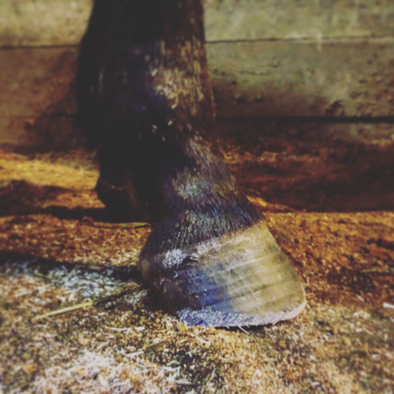
A pony was a recent purchase for my client. Needed a trim.
Effects of Conformation on Hoof Shape
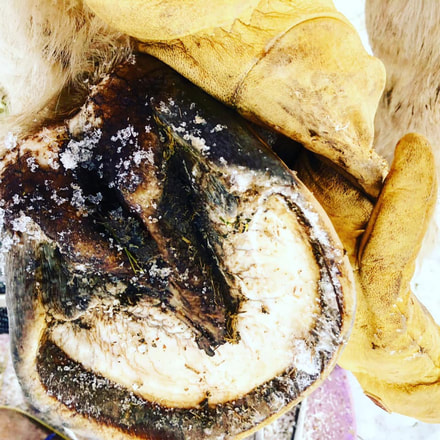
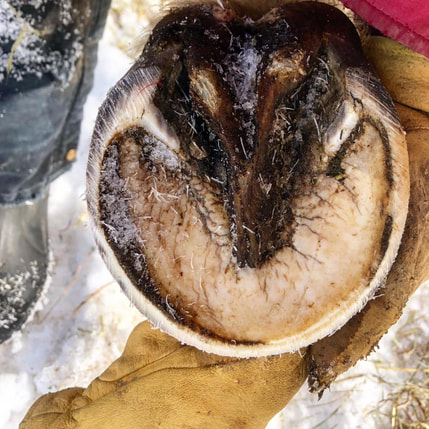
This horse is very sound. He has a narrow chest and paddles his feet meaning that they wing out. He lands on the medial side and flares on the lateral side. I lowered the heels and brought them back. Then, I tapered the heel and lowered the walls. I rolled the walls all the way around until I got to the heels. I left the heels because I want to maximize the the surface area of the heels. His heels were uneven and you can see that the coffin bone is too based on the sole depth on the left side of the photo, lower right. I balanced the foot and made break over easy to do on the inside. I can't wait to see how this foot changes over time.
|
|
OTTB with Clubfoot
|
|
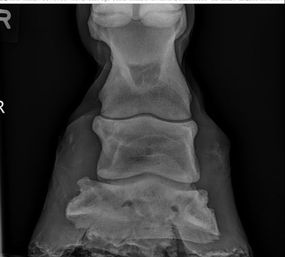
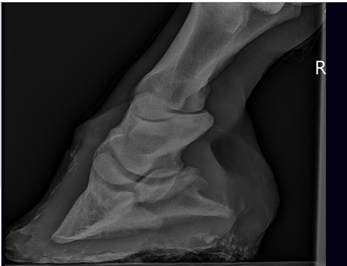
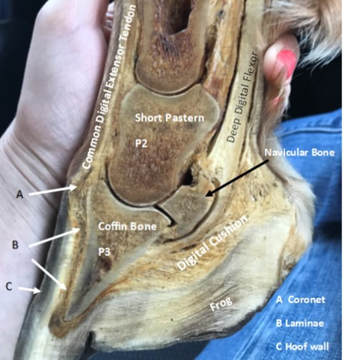 This is actually a photo I took of a friend's distal limb that was used for educational purposes. I labeled the photo to help you get an idea of the internal structures and some of the terminology that I use to explain things.
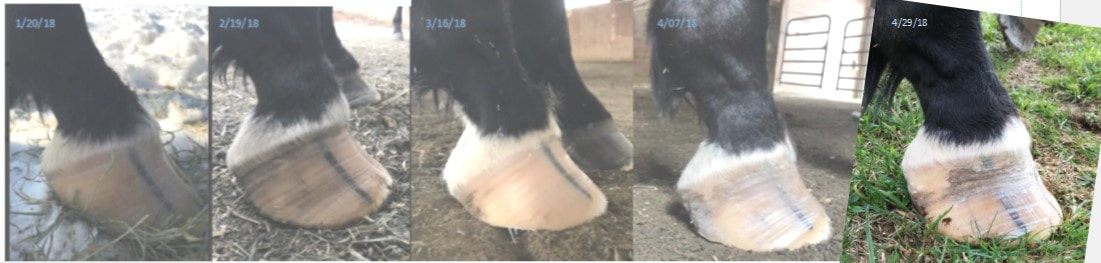
First trim on 1/20, heels were under run and toe was curled. The owner is making changes to management and the horse is being exercised, trained and receiving massage therapy which is crucial to making real, lasting change to the club foot.
Second trim, brought heels back and shortened toe.
Third trim, continuing to bring loading to the back of the foot.
New growth is coming in more attached by the coronet band. I used a measuring tool to determine heel height and did not go based on the hairline, because it was pushed up.
Horse is in boots to protect the sensitive sole and is comfortably walking around. Horse is now trimmed every three weeks.
5/21/18 the photos from this latest trim is below! I wanted to add a note that I am going back in a week, to take more heel to set angles and give relief. We should see a change to the hair line and that will tell me a lot about how this mare is loading. Stay tuned! I will update with more photos.
Second trim, brought heels back and shortened toe.
Third trim, continuing to bring loading to the back of the foot.
New growth is coming in more attached by the coronet band. I used a measuring tool to determine heel height and did not go based on the hairline, because it was pushed up.
Horse is in boots to protect the sensitive sole and is comfortably walking around. Horse is now trimmed every three weeks.
5/21/18 the photos from this latest trim is below! I wanted to add a note that I am going back in a week, to take more heel to set angles and give relief. We should see a change to the hair line and that will tell me a lot about how this mare is loading. Stay tuned! I will update with more photos.
5/21/2018 This is an updated trimming pic.

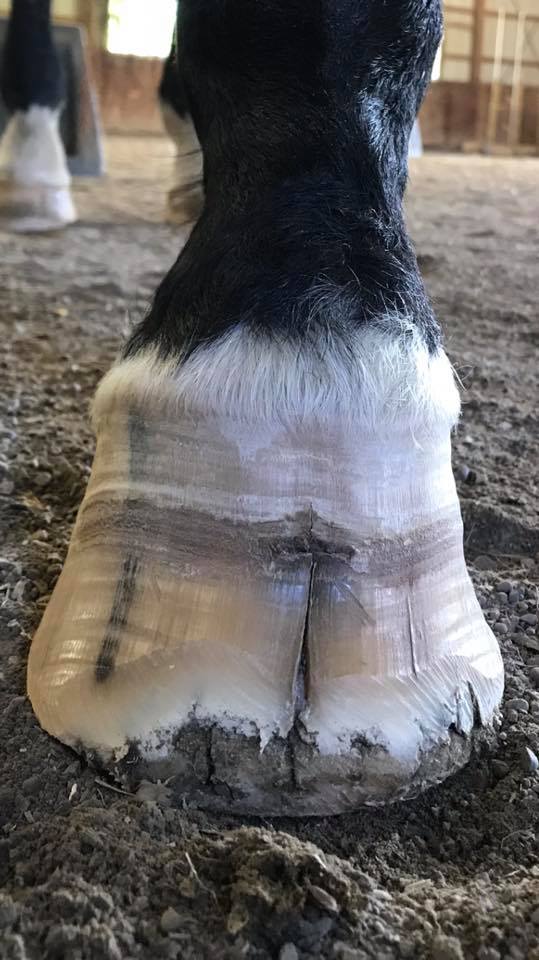
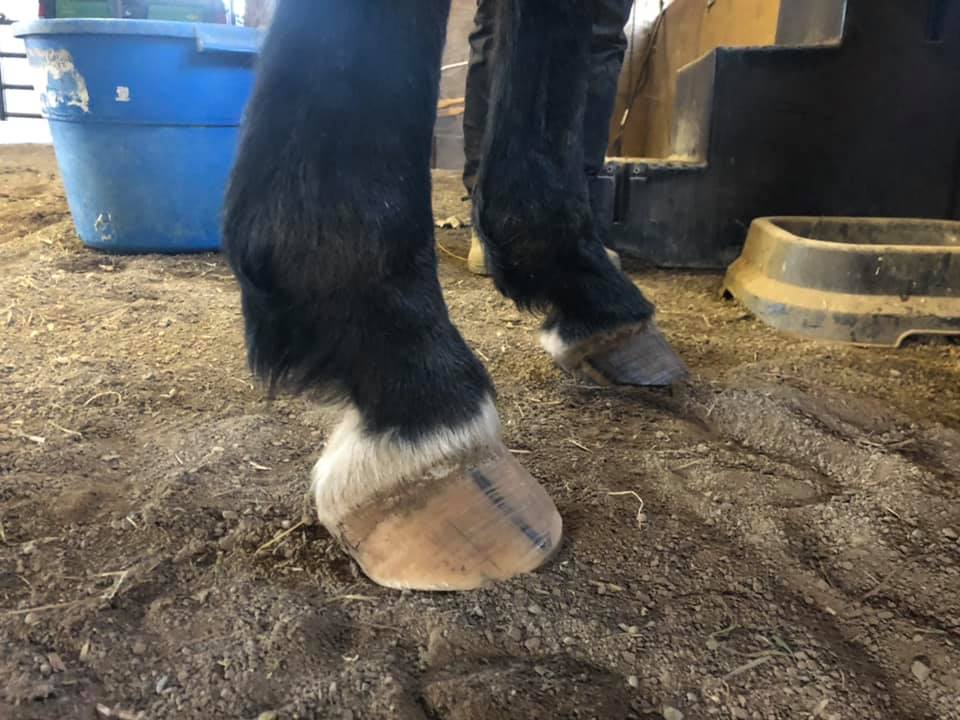
This photo was taken on 5/26/2019 She is still sound and her hoof is 5 in long/5.25 in wide. Her toe crack is gone, the integrity of the hoof is much better, and the collateral grooves are 1/2 inch. Finally (see photo below) the horse has nice concavity. Meaning her coffin bone is right where it needs to be in the hoof capsule!
This was a club foot! Not any more! This is an untrimmed concave round hoof that is growing correctly due to changes in diet, exercise, massage therapy, vet care, and more! It can be done.
|
There is a lot of interesting things going on here.
While the hairline is balanced medial/lateral it is high. I am scheduled to return in one week to take heel. I have found with this mare, I have to take heel very slowly or else she gets sore. Also, you can see an oval shaped wound to the left about mid way down. That was an old abscess exit hole and apparently this mare has had the vertical crack for a long time. It is finally moving down and the hoof wall seems to have a better connection in that spot. She wears boots most of the day with gold bond powder and in addition, she has her feet packed with Artimud. This is a great product that you can use to treat thrush and pack into larger cracks to ward off or treat seedy toe or white line. The boots are to provide comfort but, they are making the hoof wall very soft. Look at the pictures to the right! You will see what has occurred to the sole of this mare's hoof over the course of a year. She went from having a flat foot to developing concavity from regular trimming, boots, changes in diet, exercise and addressing other body issues. You would think that I should just start digging all that bumpy sole out but when I did she was sore. This is caused by her wearing her boots and she couldn't slough off the sole. When she started to feel better she could walk on sand and it smoothed it down. Sometimes, a foot is going to look weird or ugly or assymetrical for a while but, you have to accept that. You might reach a point where you can dig all that out. Or you might have to let the horse do it naturally. She did slough that off once her boots were off. Pic to the upper left... 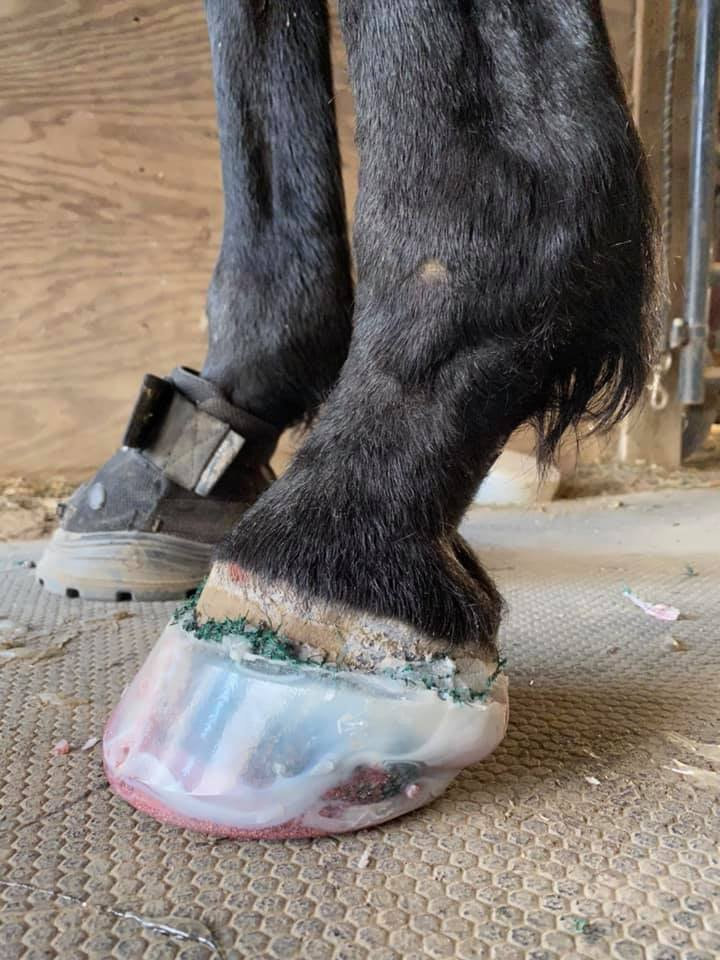
|
So, she is experiencing some white line issues. The owner will be doing a borax tea tree soak pack with Artimud when using boot and give her time out of the boot to help dry feet out.
This horse has other issues going on including possible iron overload. So we are working with a team of equine professionals! Did you ever wonder why a hair line moves? When a foot is not balanced internally, due to conformation, long toe, under run heel, or injury the foot loads incorrectly the force of each step has an effect on the hair line. 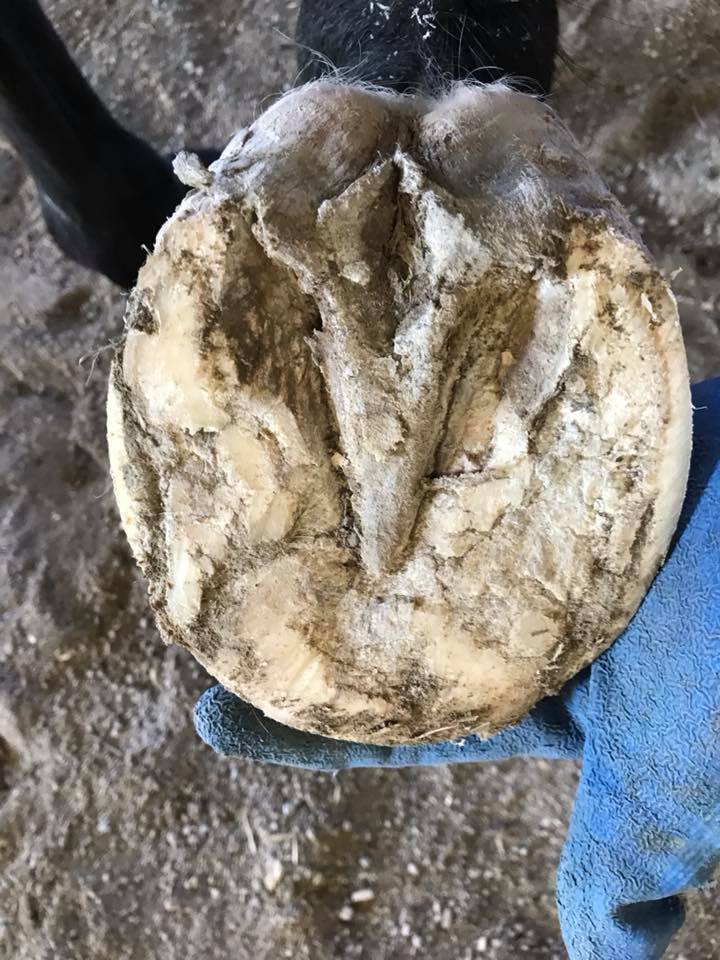
5/21/2018
Flat sole and coffin bone 1/4 inch at the area where the bar terminates (Halfway point of frog).
The photo above was taken in February of 2020. She has hind issues, SI joint issues, and still brings this hoof back when grazing so the heel is high and it was unbalanced and thus pushed up hairlines. She is sound on her feet but moves stiffly.
Ended up using Formahoof. 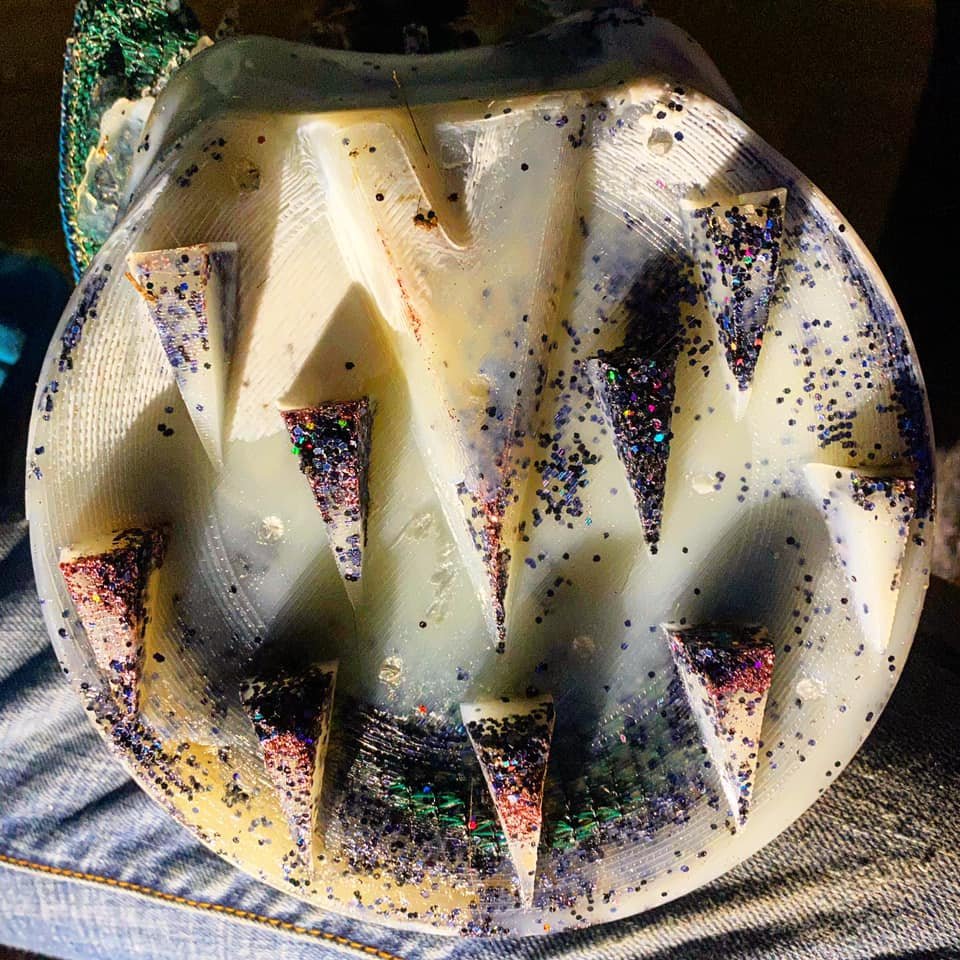
|
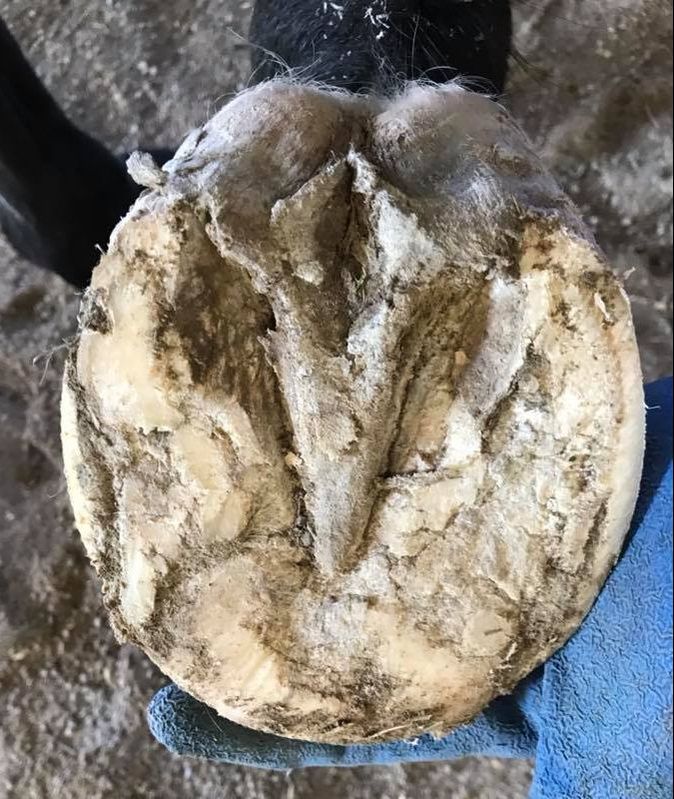
This horse has had a club foot for many many years. Her body has had to compensate for it for a long time. Small adjustments are therefore necessary. She has a ski tip at the end of her coffin bone which means she has had severe separation/laminitis in the past. Because of a previous injury she has a shorted stride on her right front and since she lands toe first, she grows heels like crazy and the back of the foot is not in use. We are asking her to make major changes to the way she uses her foot! The hairline is a useful tool for anyone who owns or works with horses as a way to tell where a problem might be hiding. Check out my article that analyzes the hoof and the hairline. 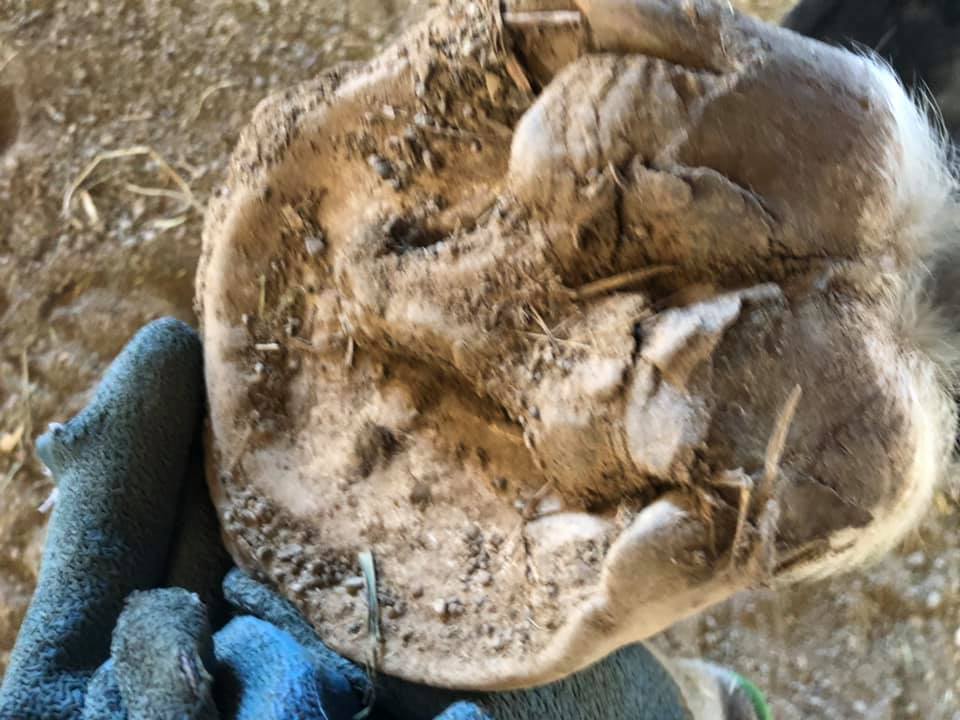
This photo was taken on 3/26/2019 almost a year later! Now, she is sound without boots, she has developed concavity and her frog has become more robust and her heels are not as pinched but much farther apart.
Update: 2/14/2020 The horse has lyme disease, Iron overload, IR and issues with SI joint.
Owner will be taking her to Dentist to take care of an abscess that is affecting tooth. Good news! The big toe crack is gone! 
|
Warmblood with Clubfoot
This horse is a 16.3 Warmblood, in his teens, ridden a few times, living the dream as top dog, on 30 acres of pasture. He had a club foot on his left front hoof, for many years and last farrier did not want to continue to work on the horse. I trimmed this horse approximately 6 times over a two month period before the owner passed away and the horse was rehomed. I really enjoyed working with this horse and he was a good boy. I am happy that I was able to help him and proud that we made progress on his feet.
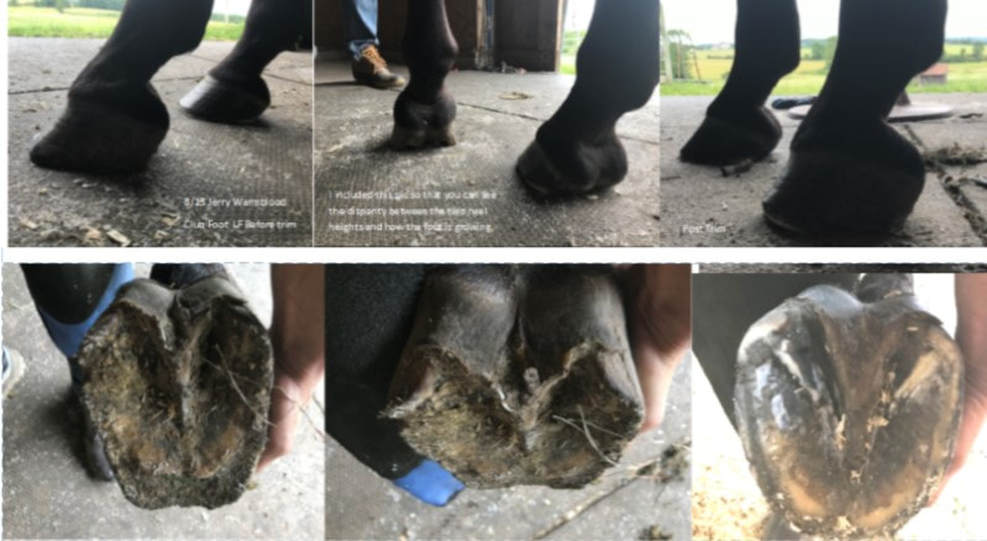
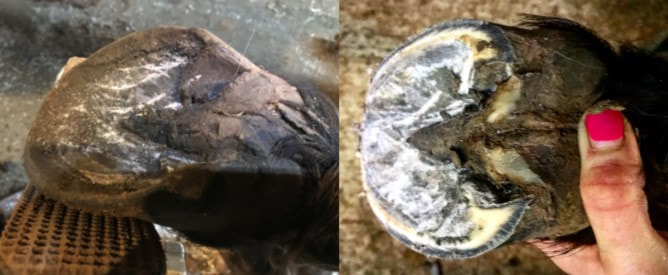
Typical club foot. High heel, scoop to the toe. X-rays were done and there was evidence of coffin bone rotation and damage done to the tip of the coffin bone. I also observed this horse while eating and noticed that he spent a lot of time with his head down eating with the left front foot back underneath him so that he could reach down and eat. He was not being exercised in any way so if this grazing posture was not allowing him to wear his heels properly, then they will grow to meet the ground. A vet had already come out and we had both recommended that the owner get body work done on the horse in the form of massage, chiropractic work, stretching and exercises in both left and right directions to help the horse increase striding, and a change in the diet as the horse was overweight.
The first picture, on the left shows just how severe the foot was. I included the second picture to help you see the difference in heel height between the two front feet. Big differences in heel height puts a lot of stress on joints, tendons, ligaments and muscle. That is where body work, weight loss, and corrective exercise --in addition to frequent/corrective trimming will help.
The first picture, on the left shows just how severe the foot was. I included the second picture to help you see the difference in heel height between the two front feet. Big differences in heel height puts a lot of stress on joints, tendons, ligaments and muscle. That is where body work, weight loss, and corrective exercise --in addition to frequent/corrective trimming will help.
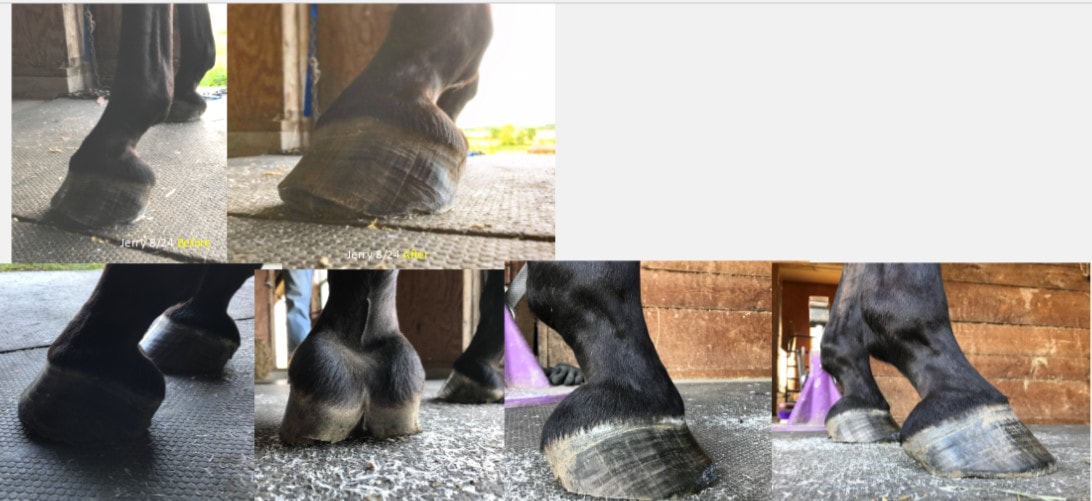
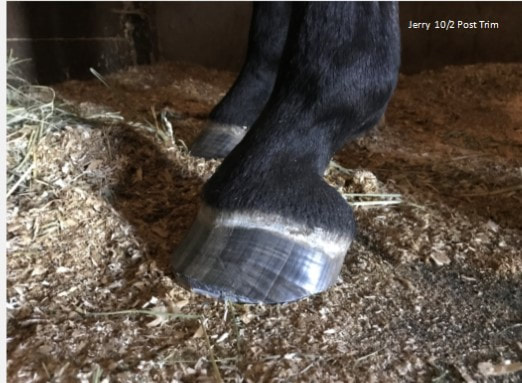
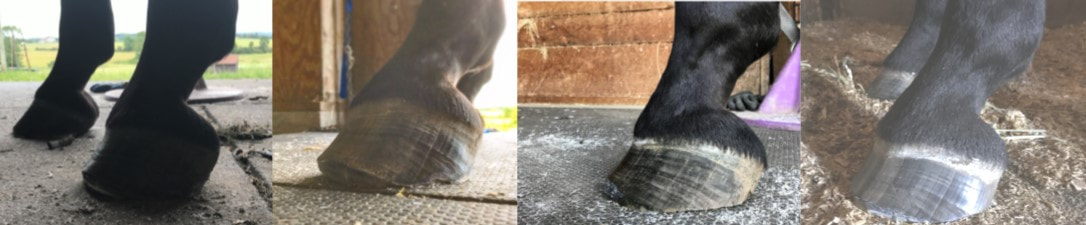
These two rows of pictures show two separate trims. The top row was 8/24. I lowered the heel more and brought back the break over to relieve pressure on the hoofwall at the toe. Otherwise the horse would continue to rip the hoof wall off the coffin bone creating painful separation.
The next row shows the third trim. Again, I simultaneously lowered and brought back the heel as much as I felt safe doing because I was positive that the back of his foot was weak and unable to support heel-first impact (for now) and kept working on the toe to keep it short to help future hoof growth come in attached to the coffin bone. I kept calling the owner to ask how the horse was doing. I was at the farm every other week and we became good friends! haha At any rate, I am happy to report that the trim never made this horse sore!
The next row shows the third trim. Again, I simultaneously lowered and brought back the heel as much as I felt safe doing because I was positive that the back of his foot was weak and unable to support heel-first impact (for now) and kept working on the toe to keep it short to help future hoof growth come in attached to the coffin bone. I kept calling the owner to ask how the horse was doing. I was at the farm every other week and we became good friends! haha At any rate, I am happy to report that the trim never made this horse sore!
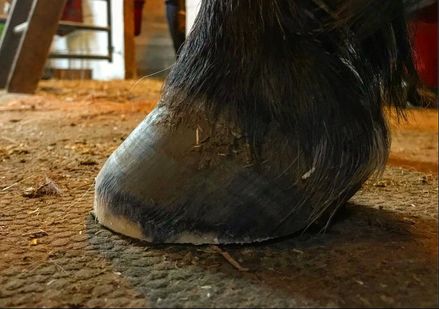
This horse went 5 months without a trim. Heels were high and toes grew very long. The horse had very thin sole and sensitive back of the foot. I trimmed approx 2-3 inches off the toe and brought back the heels without lowering them too much. That was a good place to start because the tendons need time to adjust. The horse is now getting regular consistent trimming and over time more adjustments will get this horse where he needs to be.
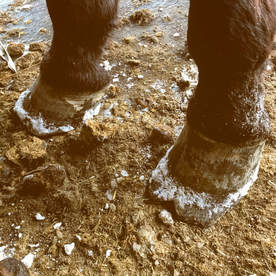
Before trim, you can see long toes. I removed almost 3 inches of excess growth.
|
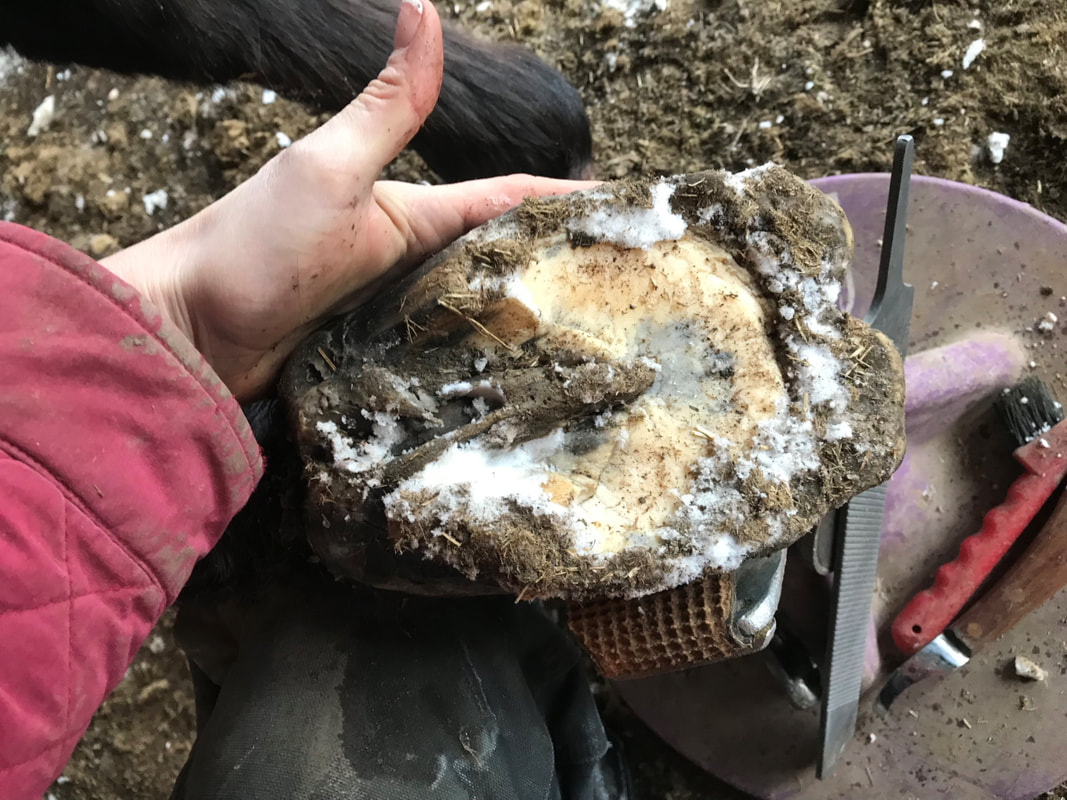
This horse has been landing toe first for a long time. The back of his foot has diminished. You can see that he barely has any frog and his heels are too far forward.
|
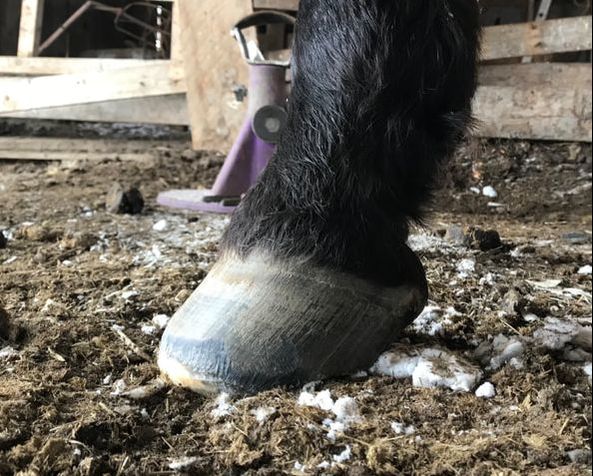
By removing the long toe, each time the horse takes a step he won't be continually putting stress on the connection of the hoof wall to the coffin bone. Also, by adjusting the heels, the horse can now start to load on the quarters and hopefully start to build the back of his foot.
|
Case 3:
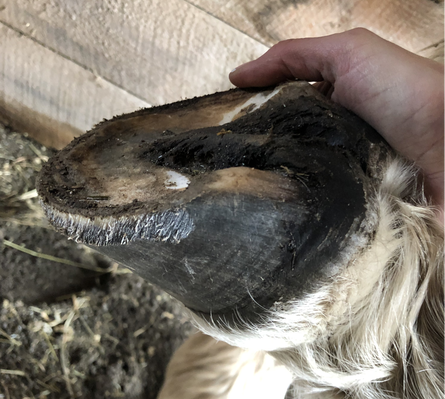
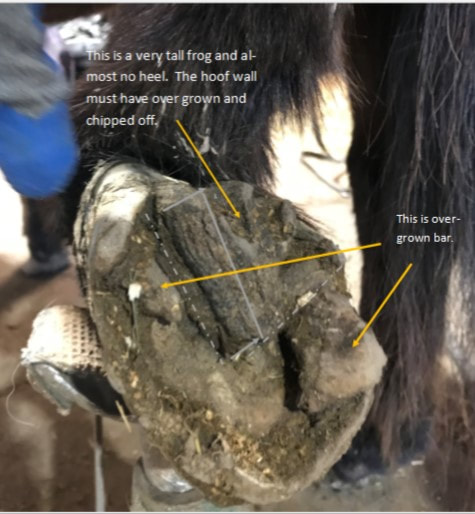
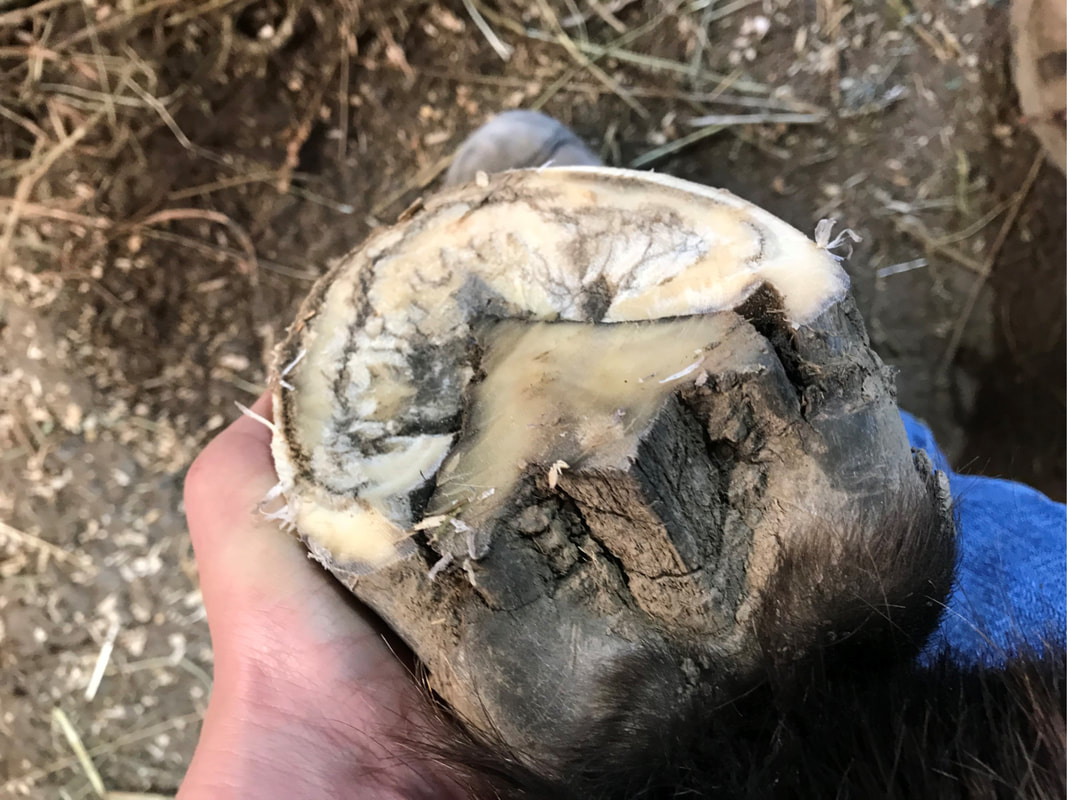
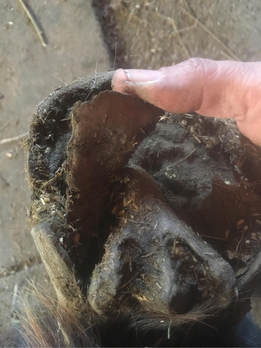
This is a rescue pony that was just left out in a field and never trimmed. His bar was severely overgrown and this is very painful. It took a couple of feet before the pony realized that I was trying to help him! The post trim photo surprises me every time I look at it. "Wow, gee there was a foot in there after all!" The pony is much better now and gets regular trimming.
|
|
Case 4:
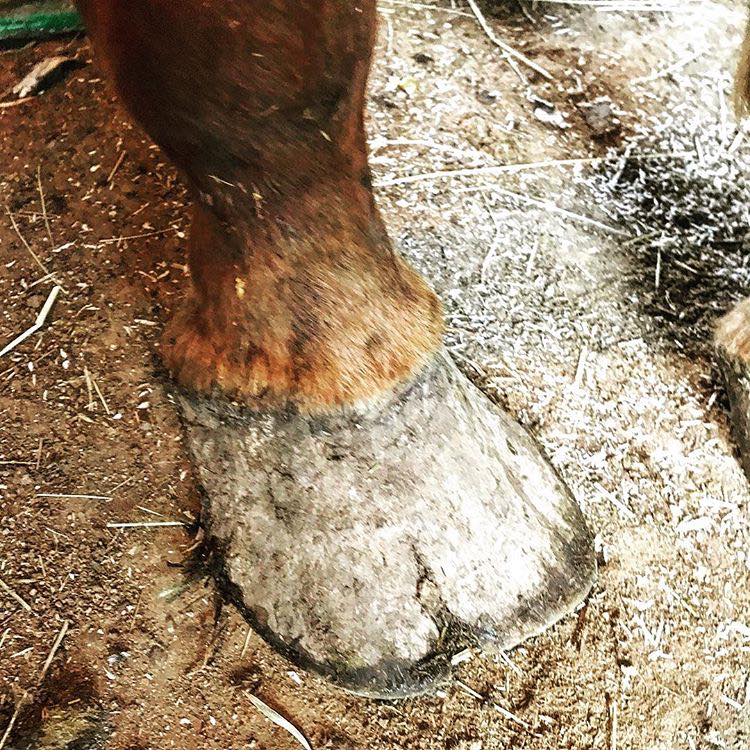
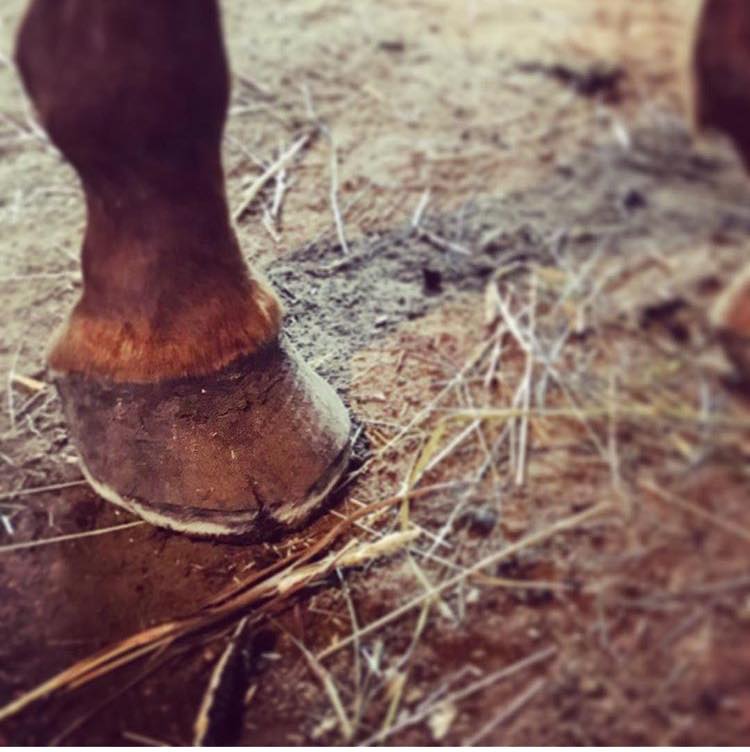
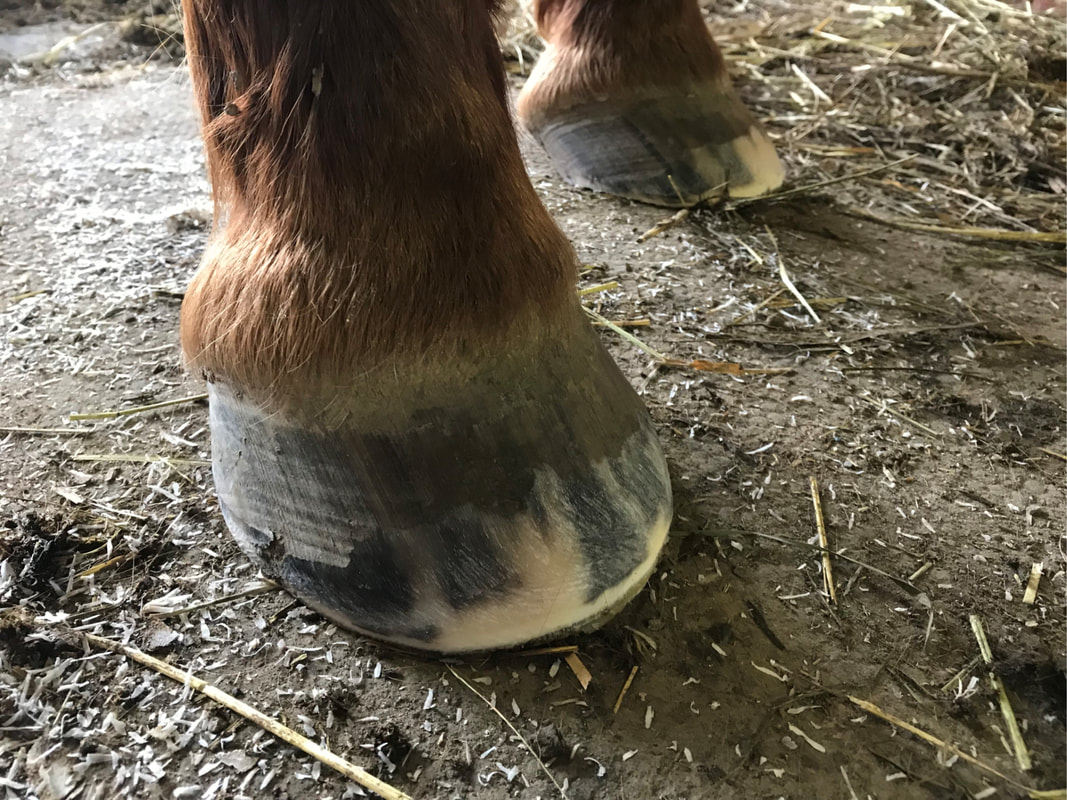
Some horses need more frequent trimming than others. This horse grew toe more quickly than his pasture mate. He requires a more aggressive trim to keep a handle on his toe length. This seems to work great for him and keeps this gelding sound and happy in his old age.
|
|
|
|
|
Case 5
|
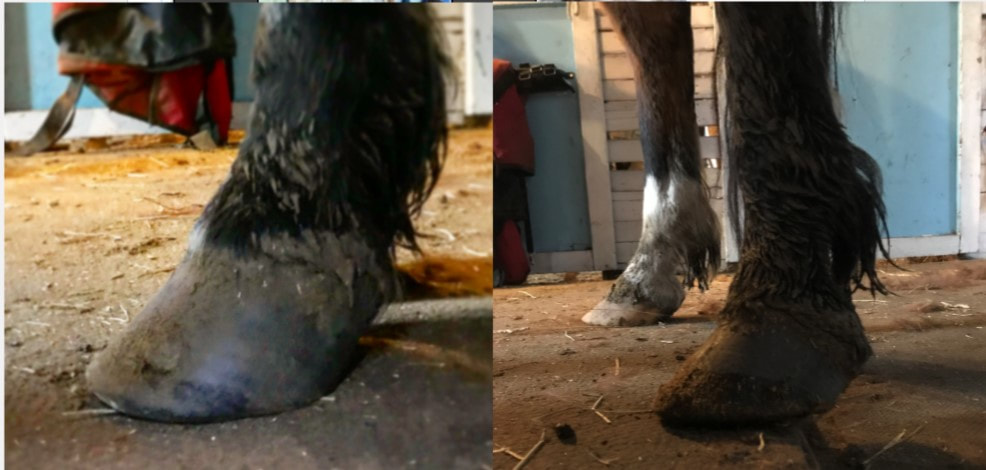
This pony was a rescue and had not been trimmed in a while.
She was a very sweet pony and now has a wonderful home with a family that will give her proper care and a job Below left are before and after pictures of the right front foot. You see that she has been landing toe first and her heels have started to get pulled with the toe shifting where she loads. I set heel height to protect the back of her foot and will continue to adjust over time.
|
Case 6:
|
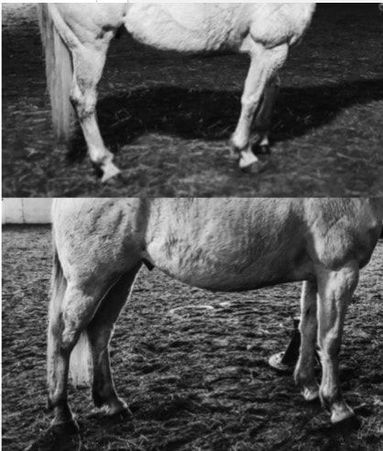
I wanted to include this horse because you can see how a trim can change the entire posture of a horse. The upper photo shows before trim. The horse was standing so far under himself that his leg positioning was similar to a "V" shape. Then, after the trim, I adjusted the heels and toe, which led to the horse standing in a more correct and balanced way.
The horse is normally trimmed every two weeks because I was trying to make adjustments to the heel. The owner was making other changes to diet, massage and environment that have helped the horse become sound and back to work! **The bump on the pastern is old scar tissue. 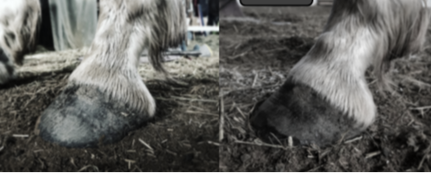
|
Case 7:
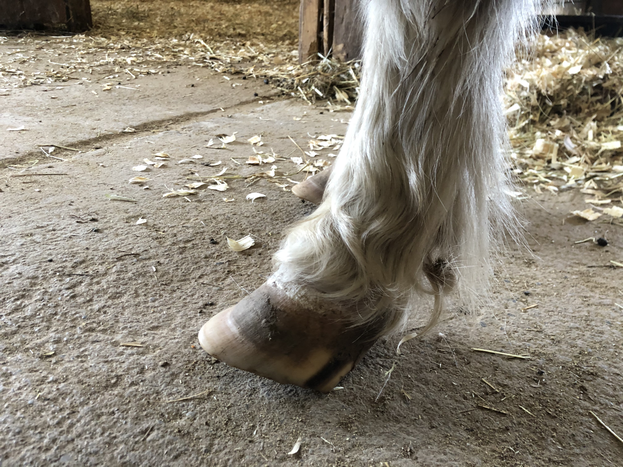
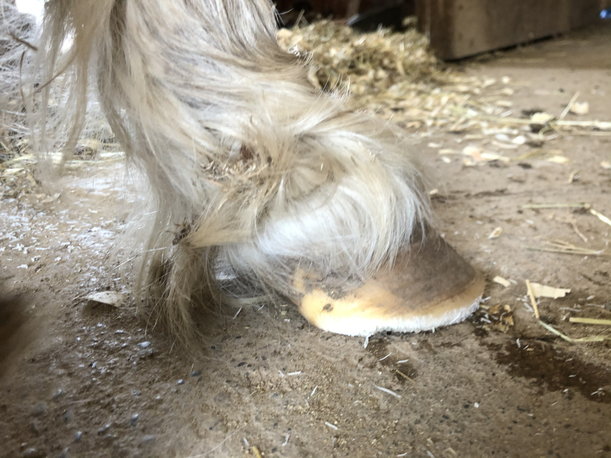
An otherwise healthy pony that just did not get regular trimming.
Case 8:
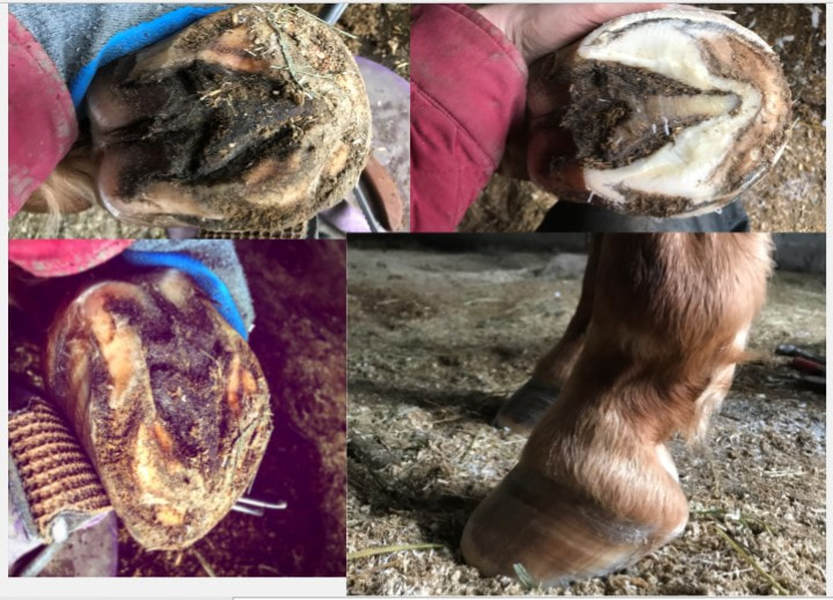
This horse had not been trimmed in many months. He lived in a muddy pasture. If you look closely, you can see that there is a lot of excess sole that was building up on the foot. I felt it was safe to take that off because it was a pressure point it was higher than the wall and I thought that there was adequate sole depth. I lowered and brought back the heels, trimmed his frog and shortened his toe.
It will take time and regular trimming to continue to adjust this foot to get it where it needs to be.
This horse also taught me that sometimes due to wearing shoes and receiving incorrect trimming during formative years can affect the hoof to the point that it will have lasting effects on the shape and alignment of the joints. We have discovered that this horse is not sound with a short toe (even with a boot) and this may be caused by the YEARS of remodeling of the joints and now they may not line up properly (anymore). So, I leave the toe a little longer than what I might do for the average horse and he is sound! Different trims work for different horses.
It will take time and regular trimming to continue to adjust this foot to get it where it needs to be.
This horse also taught me that sometimes due to wearing shoes and receiving incorrect trimming during formative years can affect the hoof to the point that it will have lasting effects on the shape and alignment of the joints. We have discovered that this horse is not sound with a short toe (even with a boot) and this may be caused by the YEARS of remodeling of the joints and now they may not line up properly (anymore). So, I leave the toe a little longer than what I might do for the average horse and he is sound! Different trims work for different horses.
Case 9:
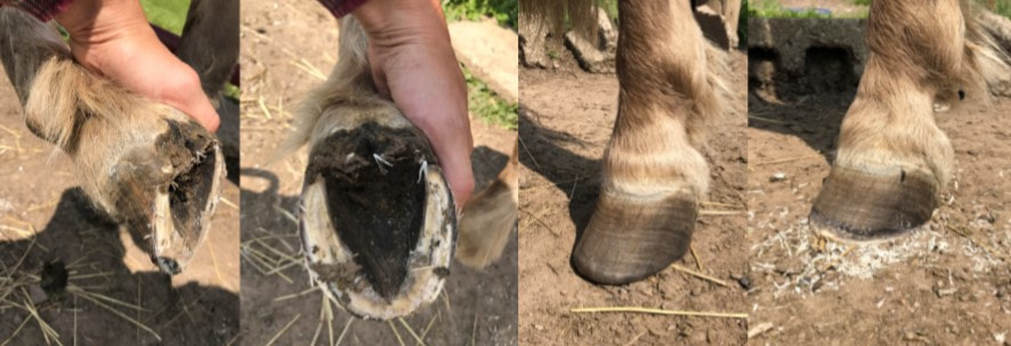
This is "Pony long toe". When I first met this pony she had looonnnnnng slipper feet and she could barely walk. She has a metabolic issue and I work hard to trim her feet so that she can be sound and happy. The first photo shows five months of growth. The second photo was taken on 4/28 and this is three months of hard work to get her feet back to normal.
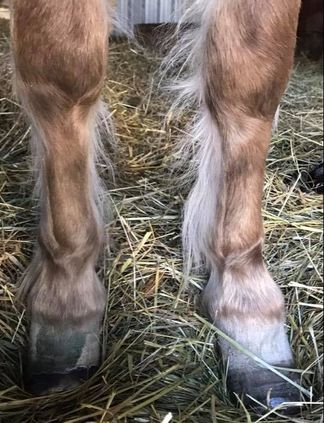
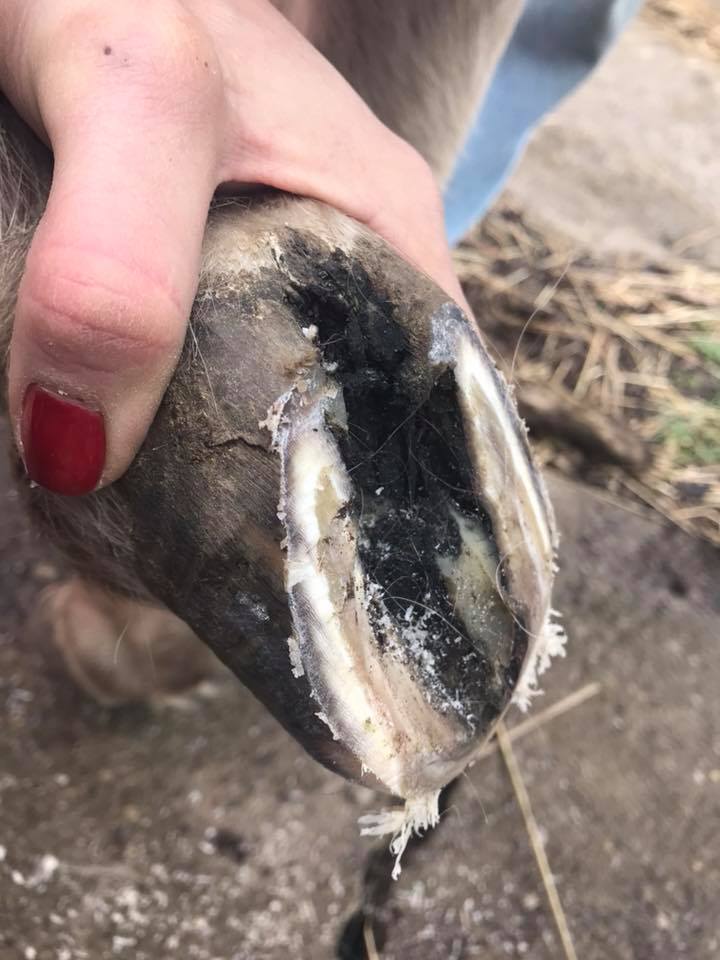
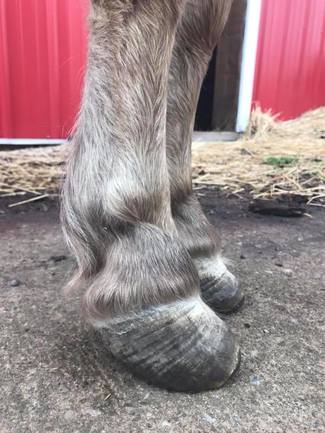
The photo below shows you how high her heels are and the damage done to her frog because the back of her foot is not getting enough contact and stimulus. She has a high sugar diet and is experiencing constant laminitis.
|
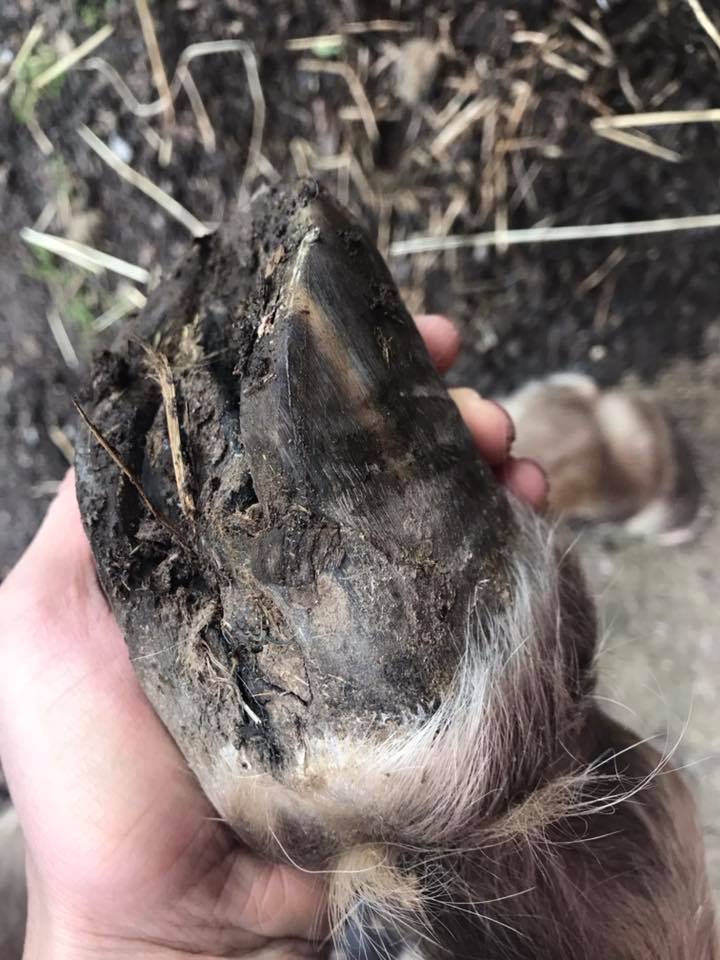
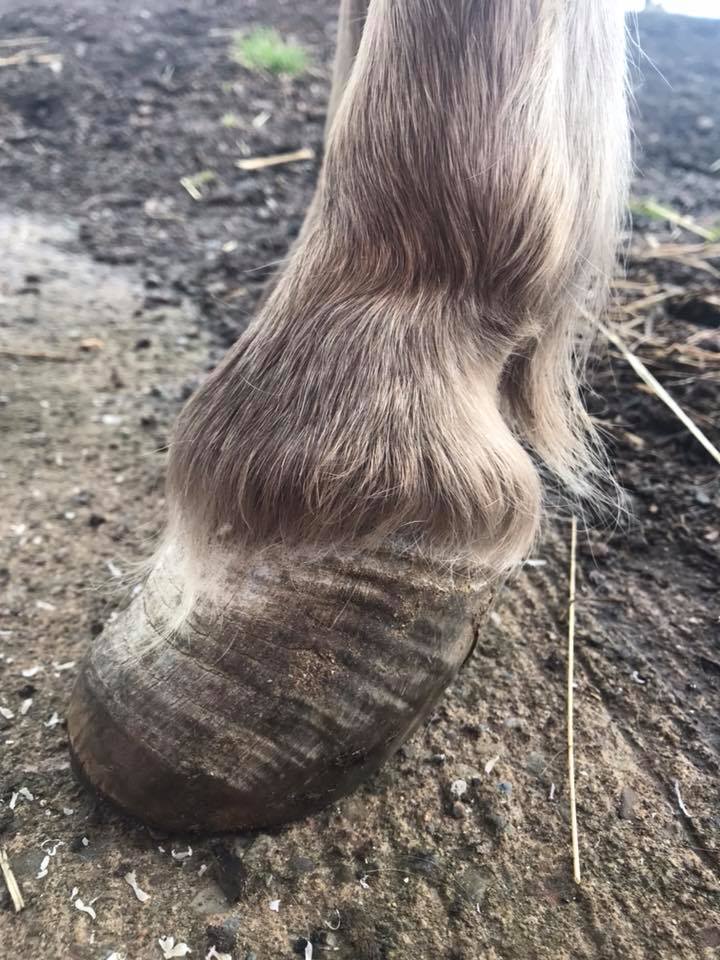
If you look closely at the photo below, you can see the bulge just above the hairline and the scoop to the hoof wall at the toe area. If I had x ray vision I would bet money that the coffin bone has rotated.
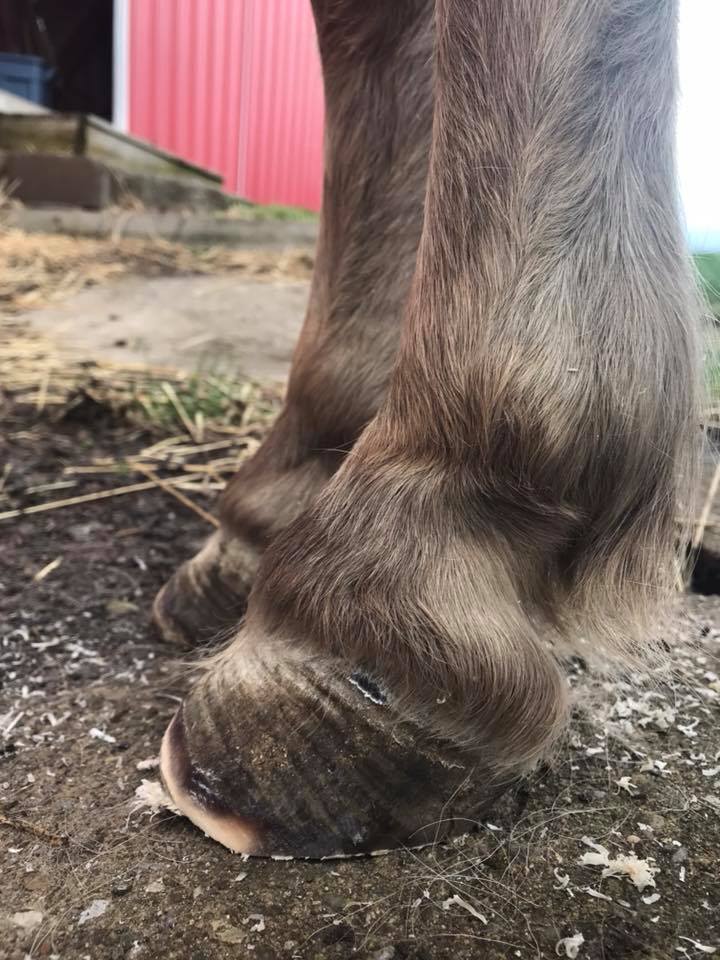
The finished product!
|
Here I lowered the heels and pulled out the necrotic frog tissue. It was black, tar like, powdered and smelled like death squared.
|
Case 10:
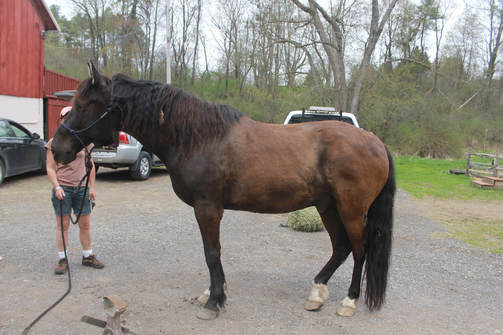
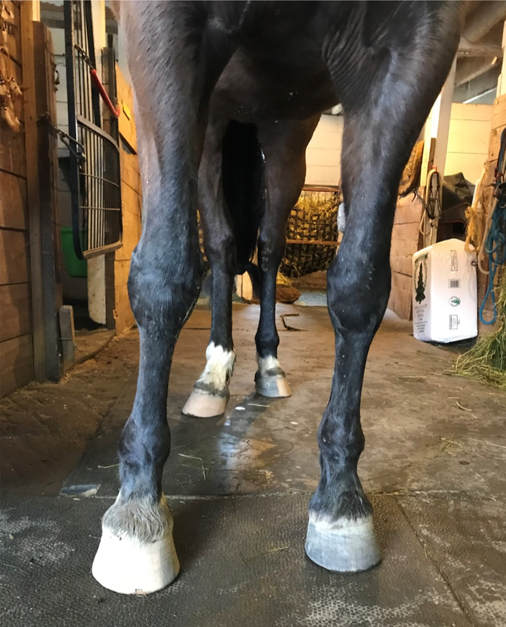
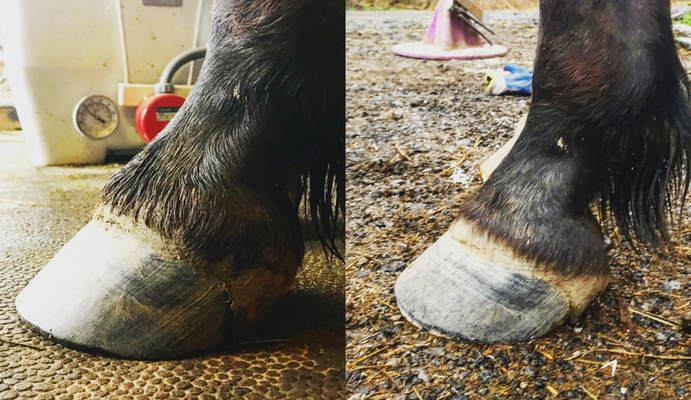
This gorgeous black mustang has some lameness issues possibly due to PPID insulin resistance, arthiritis, and
|
|
The photo to the far left was before the first trim. The toe was kept long and the horse was experiencing lameness.
The second photo is after the first trim. The toe was trimmed and heels balanced.
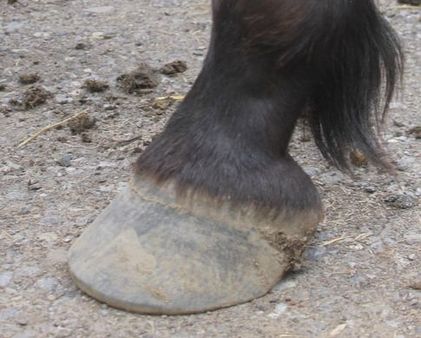
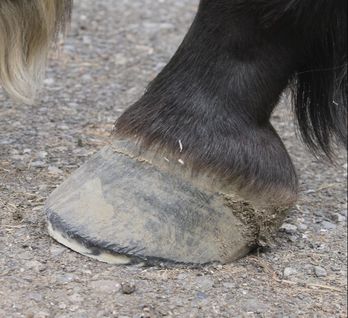
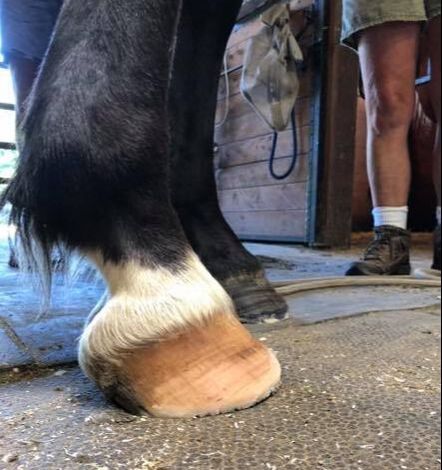
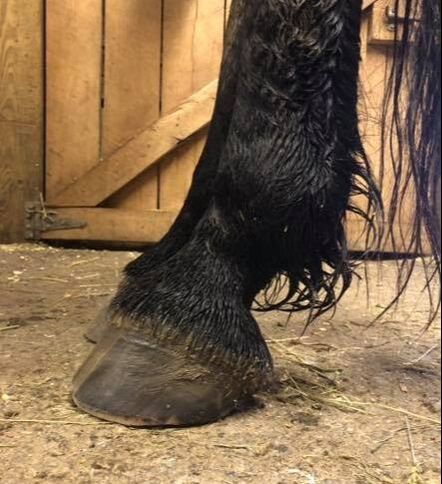
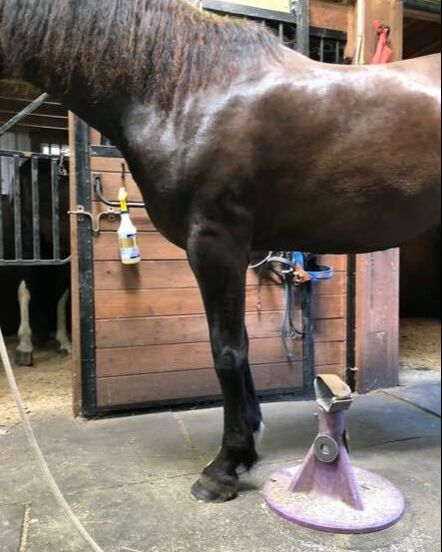
In the third photo, I returned to the farm two weeks later. The owner said that he was seen running around the pasture, something he hasn't done in a long time! She rode the morning of the day that I came and she rode him down a hill that had stones and she said that he felt comfortable picking his way down the hill, she said he hasn't been able to do that in a long time.
|
|
|
|
Random Photos
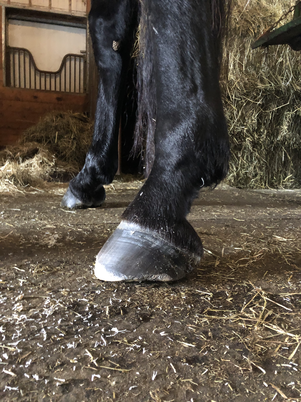
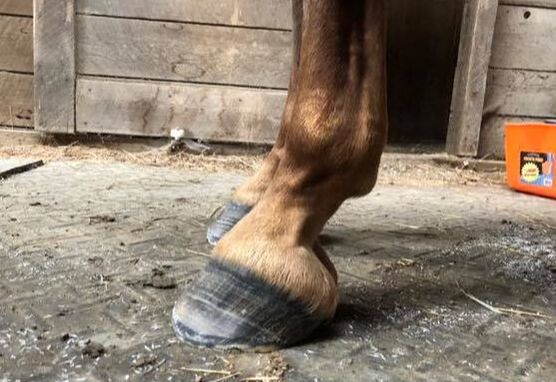
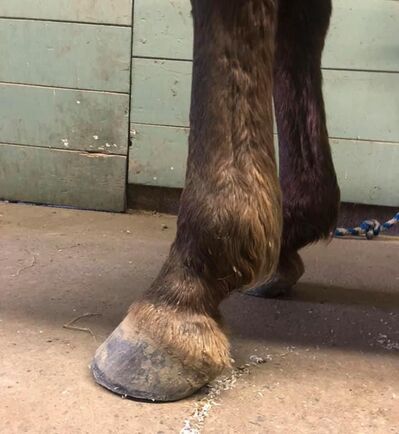
Examples of horses trim regularly that are just maintenance trims and are examples of good feet.
|
|
Toe Crack Rehab
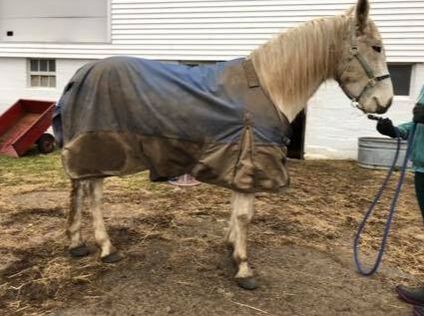
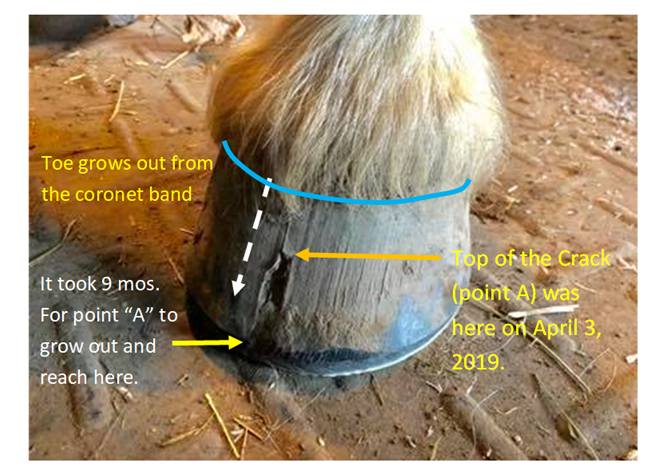
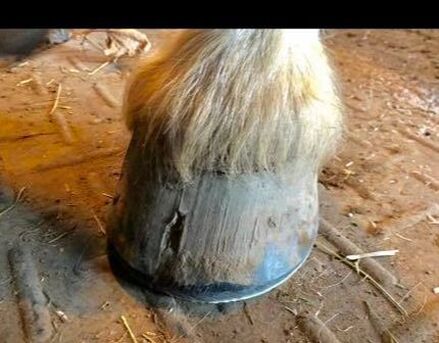
This is a mustang mare. She is ridden regularly, for trails, jumping, Eventing. There was an issue with thrush and a toe crack. The toe crack was not deep. I also noticed that she had square toes. Owner said it is a chronic issue. Sometimes it would go away but would always come back. We addressed the thrush, diet, and after carefully adjusting heels to ensure heel loading, keeping the bars straight, short rounded toe, bevel and relief at the quarters the toe crack grew out.
I wanted to include a pic of the whole horse so that you can see how she is built and how she stands at rest. Also, the picture on the upper right was taken on April 3, 2019 and the picture below was taken Jan 3, 2020. At this point I trimmed the last of the crack and there are no signs of it at this point! It took 9 months for this particular horse to grow all that out. We feel accomplished! 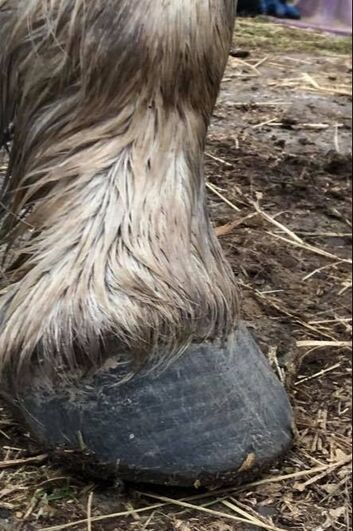
|
|
Trimming a Donkey
|
|
|
Horse with Overgrown Feet
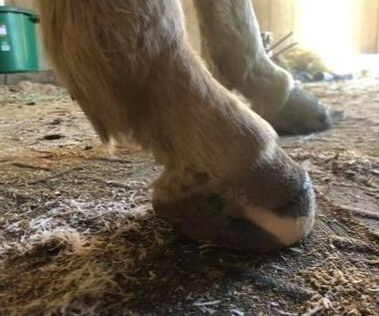
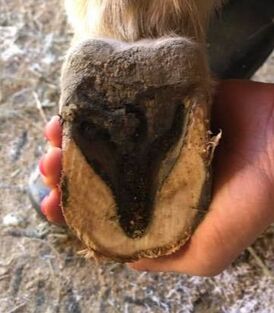
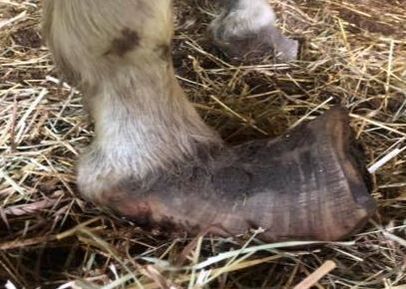
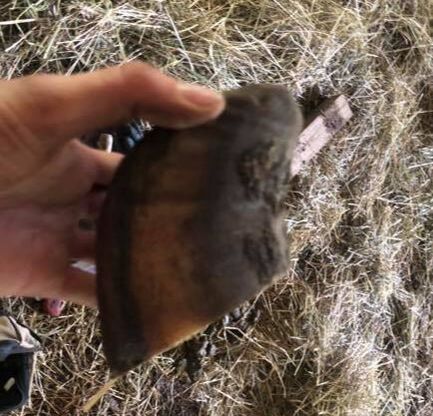
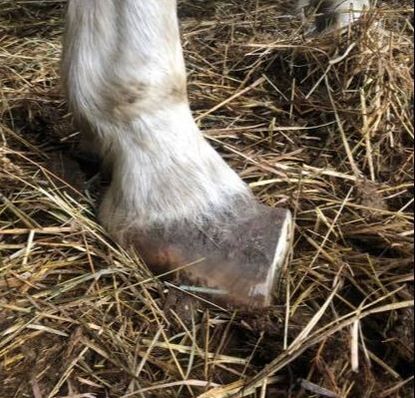
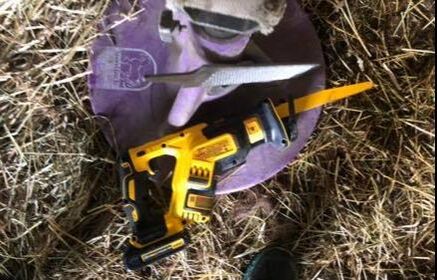
Used a saws-all to trim this horse's hooves. This sequences shows the before and after. I do not try to remove it all on the first try. This horse had long feet for a long time. and this requires time for the horse's body to adjust.
|
|
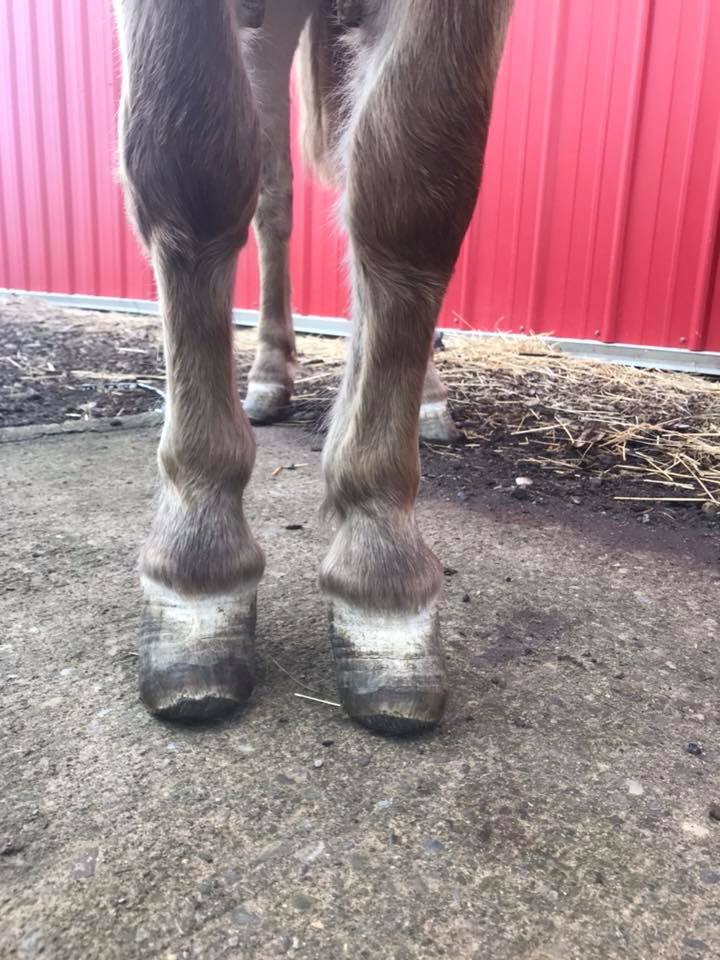
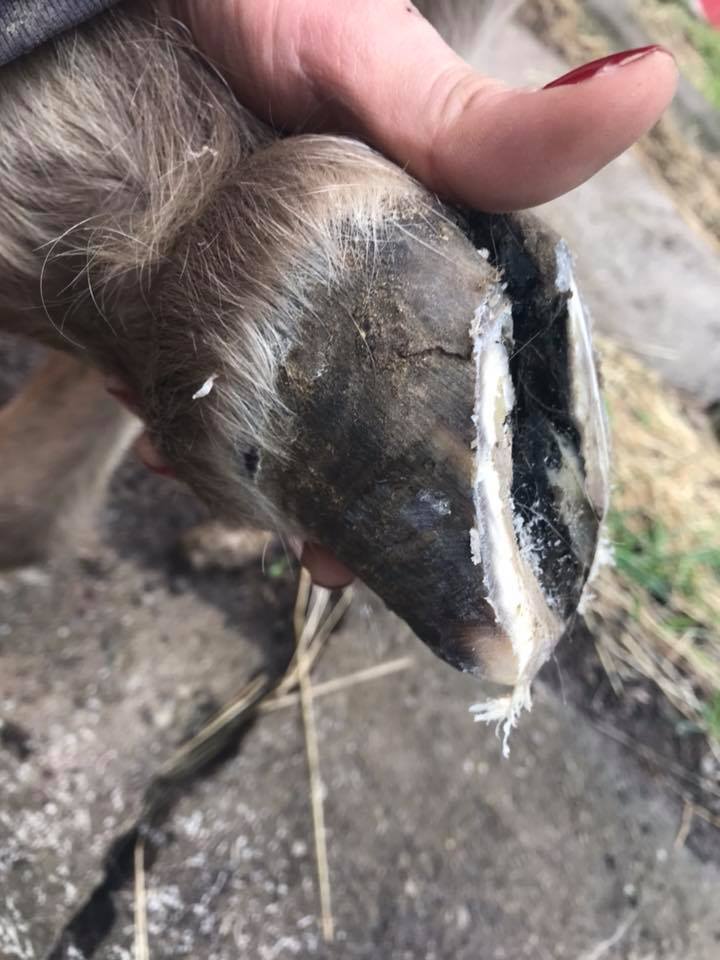
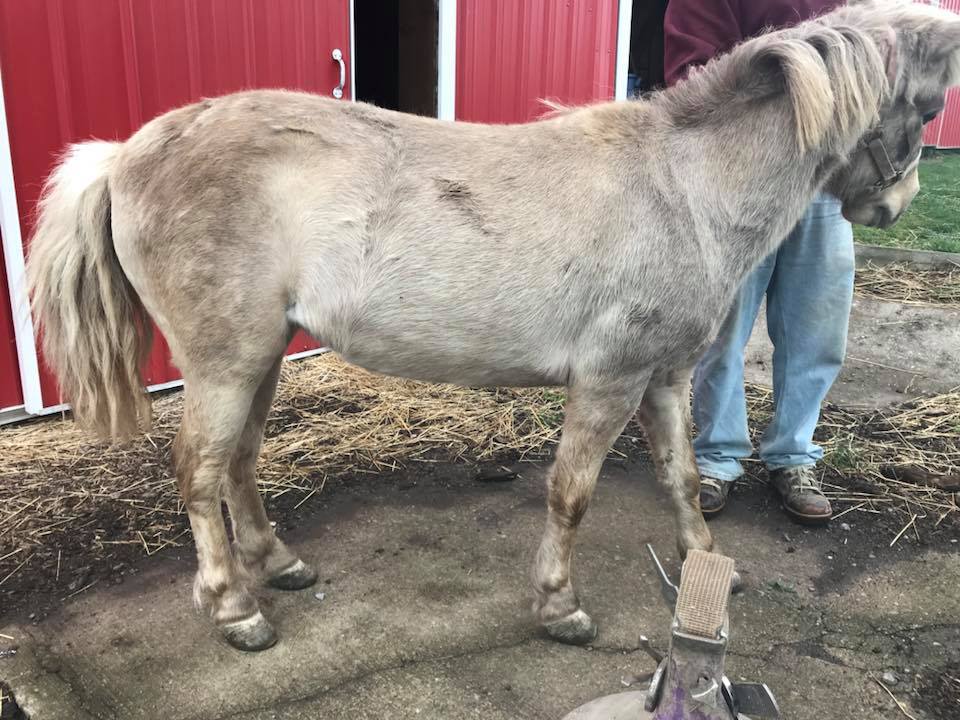
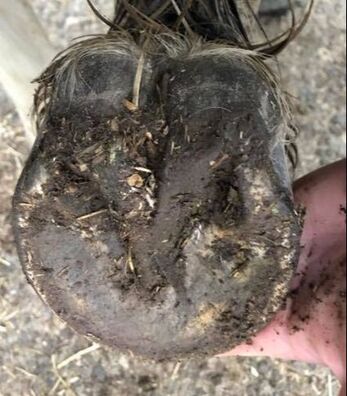
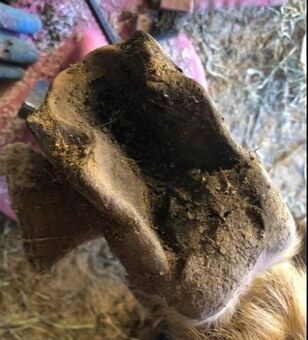
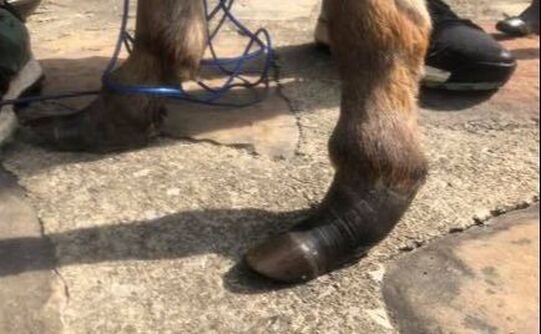
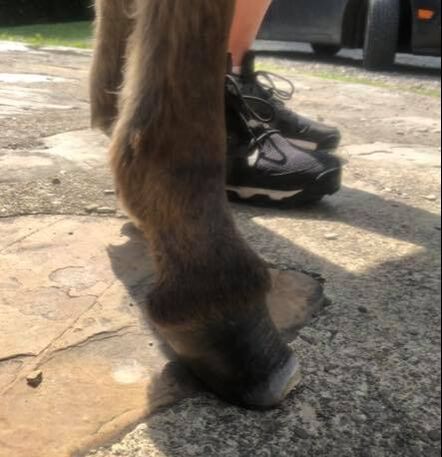
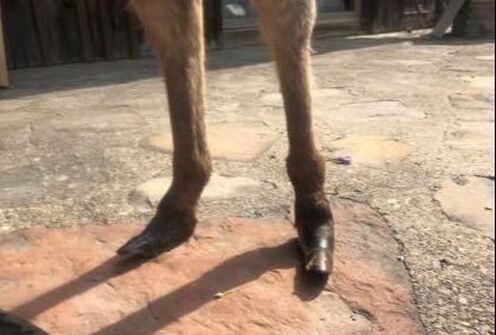
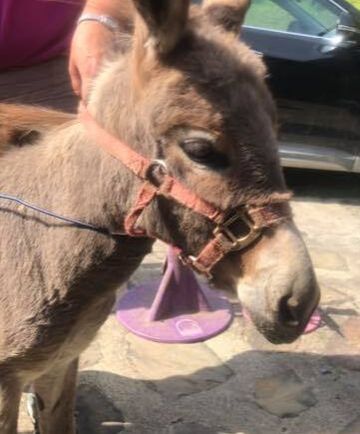
Here, I was hired to trim a mini donkey that was not able to get trimming for a long while. I wanted to show how I was able to envision what the hoof needed to be and get it closer to a healthy state. The lower left photo shows how much I took off in one trim. The new owner had me come out on a regular schedule so that this would not happen again.
|
|
Quarter Horse Mare
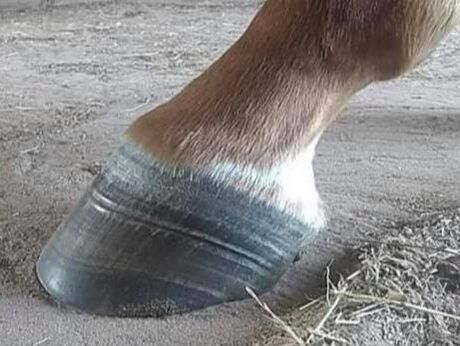
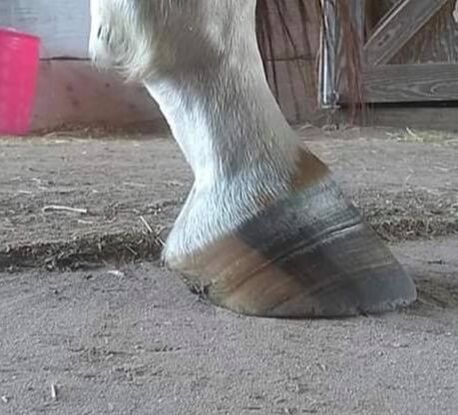
This mare had spent several years in a field just being a horse until my friend Nate came along. When I first met her, she was barefoot, her hooves had many wrinkles in her hoof wall and very underrun. The first four photos are pictures of her feet when I first met her in August in 2019 before I trimmed her.
|
|
|
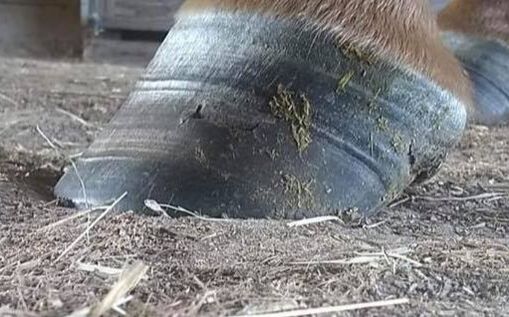
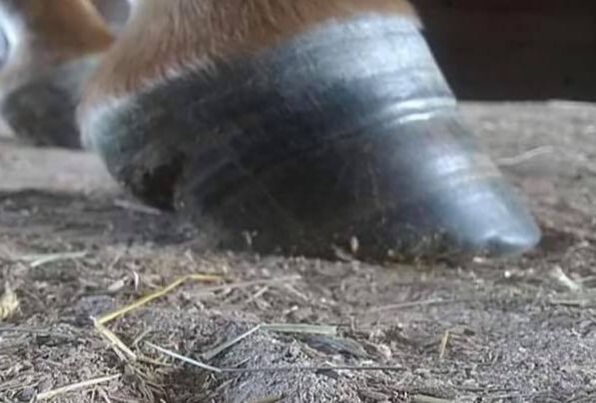
In these photos, you can see rings along the hoof wall. They most likely indicate areas of laminitis. The horse was kept in a field and it is very likely that she ate grass and the high sugar content caused the ridge. Ridges are formed during lamintis when the laminae that connect the inside of the hoof wall to the coffin bone, disconnect. At the time she had contracted heels and high heels that applied pressure creating a high hair line.
|
|
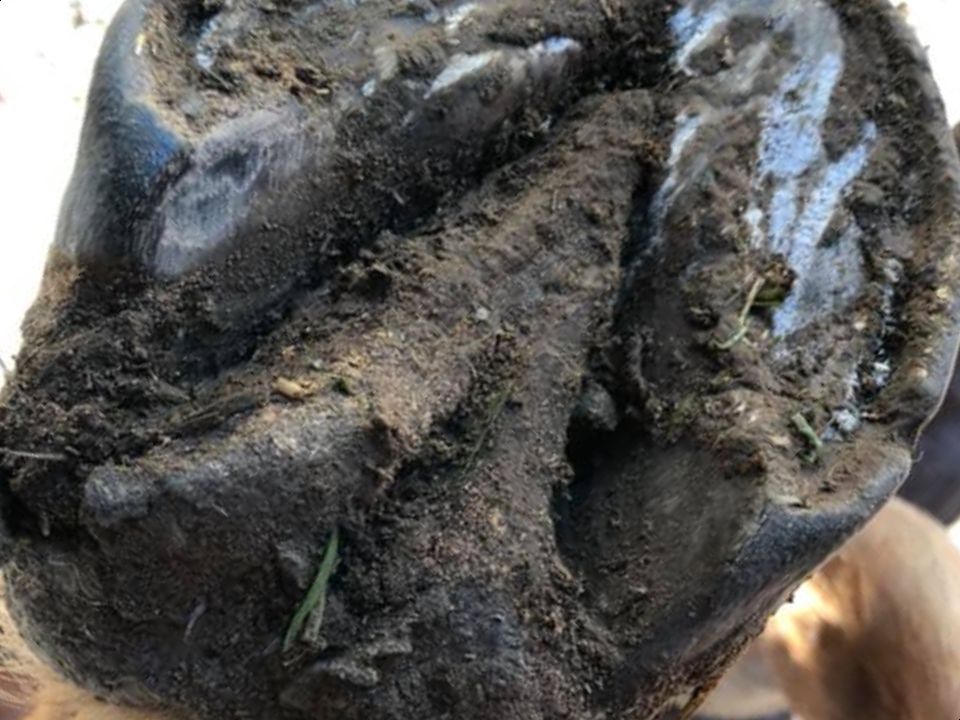
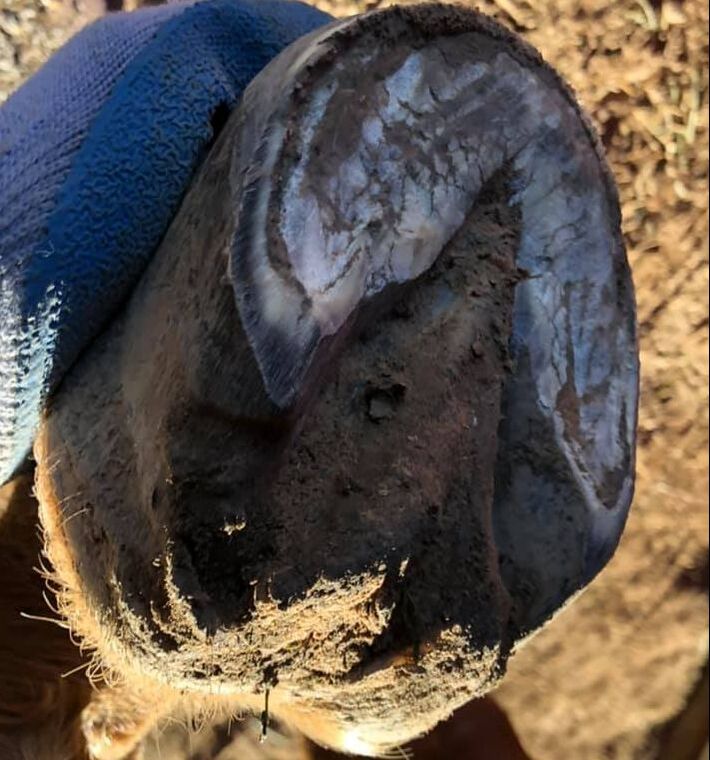
She had soft frogs that were infected and consequently developed excess hoof to protect internal structures.
If you look at the picture to the left, you can see her sharp under run heels and overgrown bar. This tells me that she lands heel first over soft ground. Brought her heels back and lowered them some. I wanted him to get her on a good treatment protocol for thrush so that it would heel and then we would be able to get her to land heel first. |
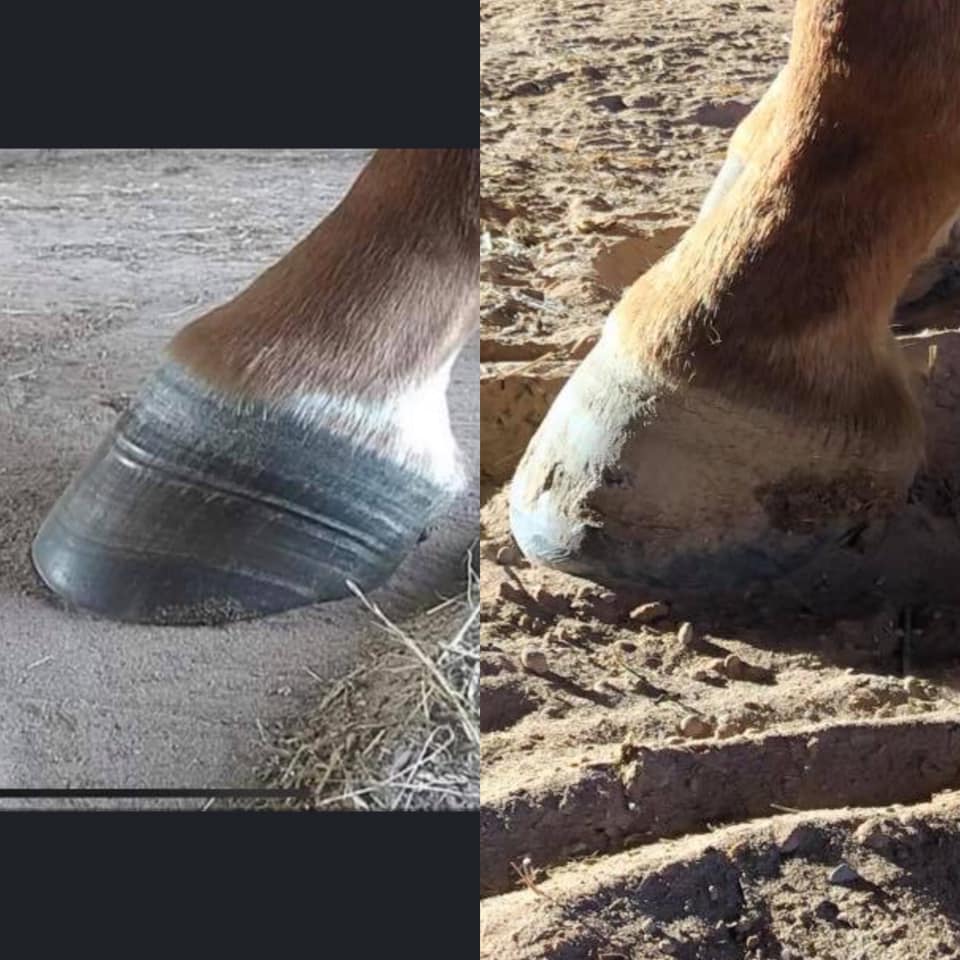
The This picture shows a comparison between the Aug 2019 photos and Oct 2019 trim. She has much healthier hoof growing in with a balanced diet, exercise and different trimming.
|
|
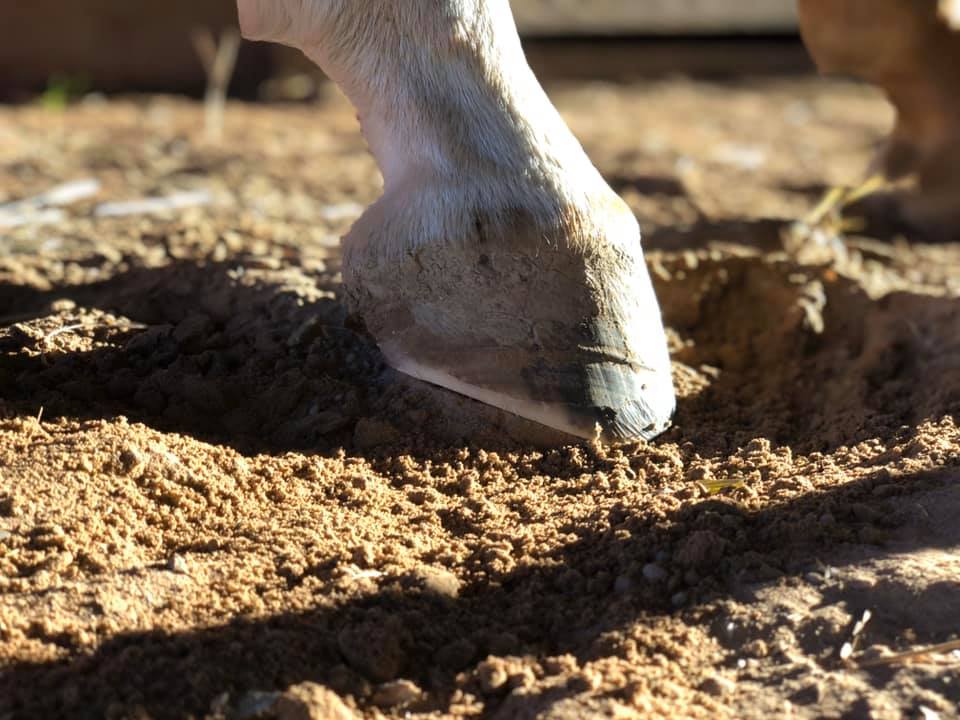
Look at this gorgeous hind foot! This was only after two trims! <3
|
|